Best Bounce House Features for Kids of Different Ages

Meta Title: Best Bounce House Features by Age: Toddlers to Teens (2026 Guide)
Meta Description: Choosing a bounce house? Match features to age. Toddlers need low walls and open layouts; school-age kids thrive on combo slides; teens want obstacle courses. Here’s the age-by-age breakdown.
Focus Keyword: best bounce house features for kids of different ages
Secondary Keywords: bounce house for toddlers, combo bounce house with slide, obstacle course for teens, age-appropriate bounce house
A bounce house that delights a four-year-old can bore a ten-year-old in minutes—or worse, pose a safety risk for a toddler if bigger kids are jumping nearby. The features that matter most shift dramatically as children grow. This guide breaks down exactly what to look for at each stage, from low-entry toddler units to competitive obstacle courses for teens.
Quick Answer: Features by Age Group
| Age Group | Key Features | Best Unit Type | Safety Non-Negotiables |
|---|---|---|---|
| Toddlers (1–4) | Low entry step, low walls, open layout, mesh siding, familiar characters | Small dry bounce house (13×13 to 15×15) | Adult supervision at all times; separate from older kids |
| Young Kids (5–8) | Bounce area + slide combo, tunnel entrance, mesh walls | Bounce-and-slide combo | Group by size; no mixing with teens |
| Tweens (9–12) | Competitive elements, climbing, racing, water options | Obstacle course, sports unit, water slide | Capacity limits strictly enforced |
| Teens (13+) | Challenge, speed, head-to-head competition | Obstacle course, interactive games, giant slide | Commercial-grade rating; weight limits checked |
Best Bounce House Features for Toddlers (Ages 1–3)
Toddlers are beginning to explore movement, balance, and coordination. For this age group, simplicity and age-appropriate design are more important than having multiple activities.
Important: Many inflatable bounce houses are not approved for children under age three. Always follow the manufacturer's minimum-age guidance. For younger toddlers, choose developmentally appropriate alternatives instead of a bounce house not rated for their age.
1. Low-Profile Design and Easy Access
For toddlers old enough to use a manufacturer-approved inflatable, a lower-profile design with a clearly accessible entrance may make supervised play easier.
Look for:
Low entry steps or a gentle entrance ramp.
Soft, properly constructed inflatable surfaces.
A compact layout without unnecessary obstacles.
Entry and exit areas that adults can supervise easily.
2. Protective Mesh Walls
Mesh enclosures can help keep children within the designated jumping area while allowing caregivers to see inside.
Choose a design with securely attached mesh, appropriate openings, and no exposed gaps that could create entrapment hazards.
3. Gentle Slides
If the manufacturer approves the inflatable for the child's age, a short, gently sloped slide can introduce an additional activity.
A suitable slide should have a clear landing area and should not require difficult climbing movements.
4. Simple, Friendly Themes
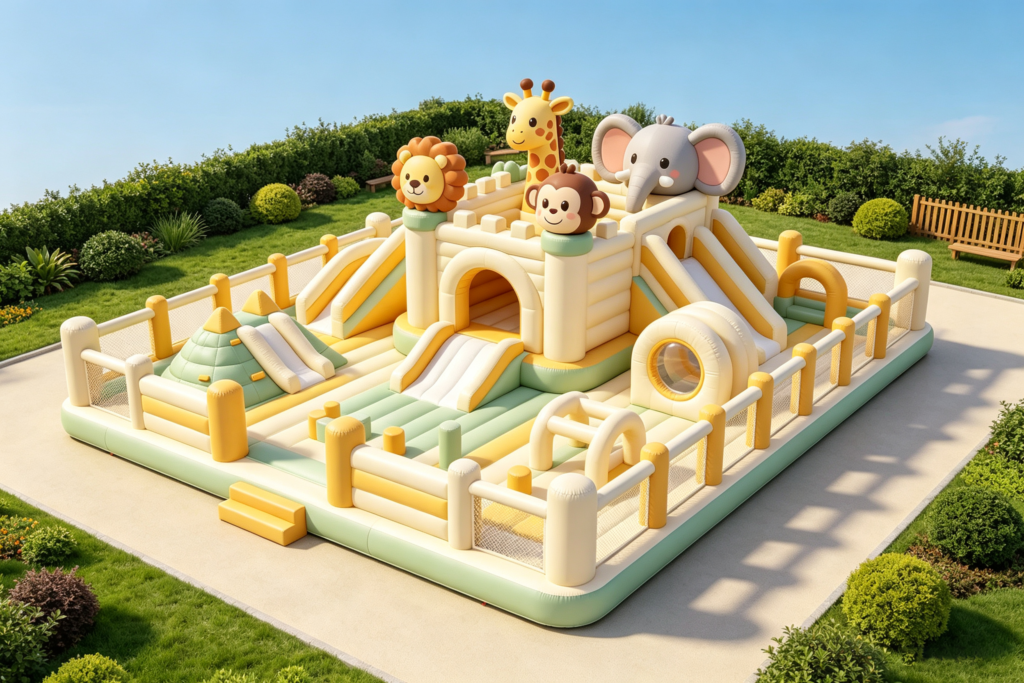
Bright colors, animal designs, and playful castle themes can make an inflatable visually appealing without adding complicated play features.
Best choice: A compact, age-approved inflatable with simple activities, a secure enclosure, easy access, and a clear view for adult supervision.
Best Bounce House Features for Preschoolers (Ages 3–5)
Preschoolers often become more confident in their movements and enjoy games that involve imagination, exploration, and social interaction.
For this age group, the best bounce house features may include a combination of jumping, sliding, and simple interactive activities.
1. Spacious Jumping Area
A well-designed jumping area gives children room to move within the inflatable's stated occupancy limits.
Look for a stable design with appropriate protective walls and a clearly defined play area.
Children should be supervised and separated from significantly larger or more physically advanced users.
2. Built-In Slides
A bounce house with a slide adds variety to backyard play.
Slides can provide a different movement activity from jumping, helping children practice body awareness and coordination.
Check the slide's height, entry design, landing zone, and age rating before purchasing.
3. Interactive Play Features
Preschoolers may enjoy simple features such as:
Soft basketball hoops.
Age-appropriate crawl-through tunnels.
Small climbing elements.
Imaginative play themes.
These activities can encourage movement, creativity, and cooperative play when used as directed.
4. Durable Materials and Construction
For frequent backyard use, inspect the product's stated material specifications, seam construction, anchoring requirements, and intended use.
Durable fabric alone does not establish product safety. The complete inflatable should be appropriate for its intended users and comply with applicable requirements.
Best choice: An age-approved bounce house with a jumping area, gentle slide, visible play space, and a few simple interactive features.
Best Bounce House Features for Kids Ages 6–8
School-age children often seek more varied physical activities and may enjoy challenges that combine movement, coordination, and problem-solving.
A multi-activity inflatable bounce house can be appealing for backyard parties and supervised family play.
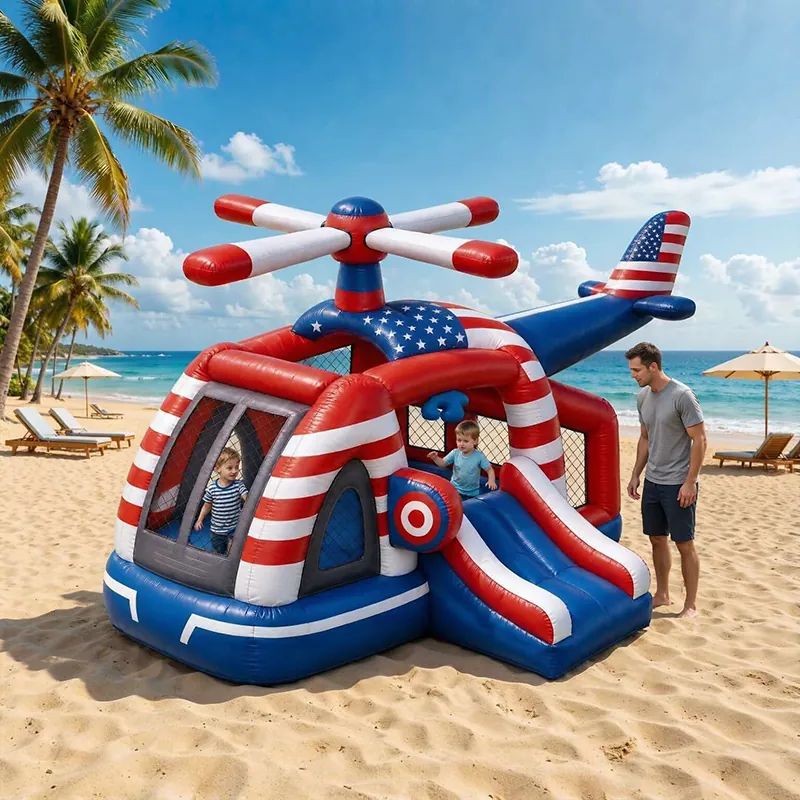
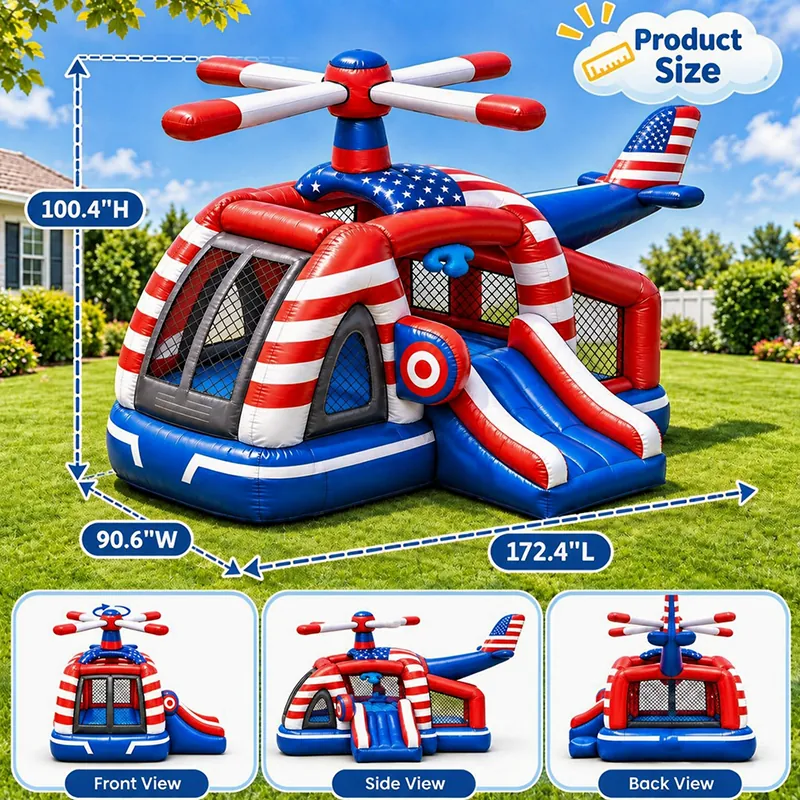
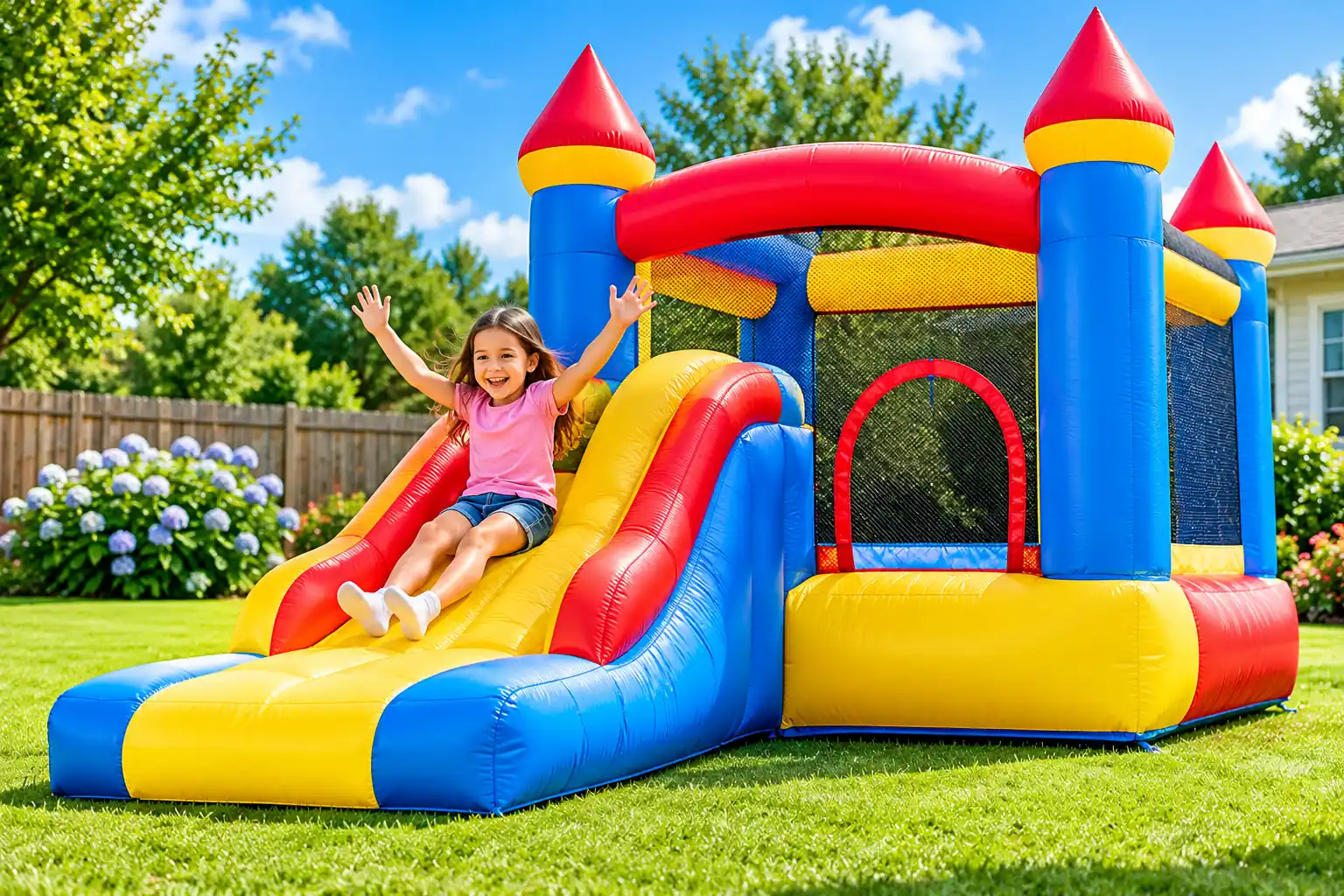
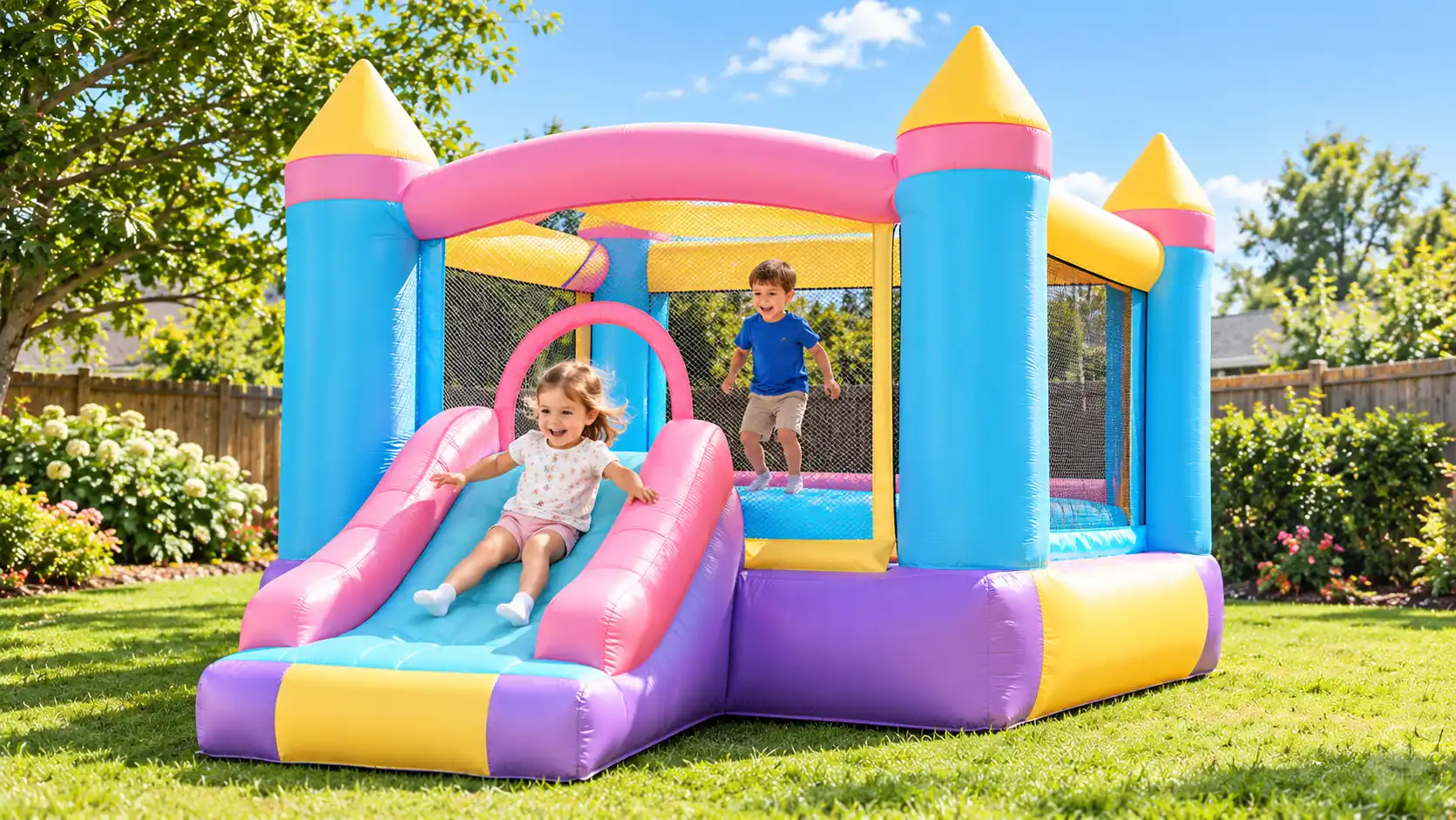
1. Bounce House and Slide Combos
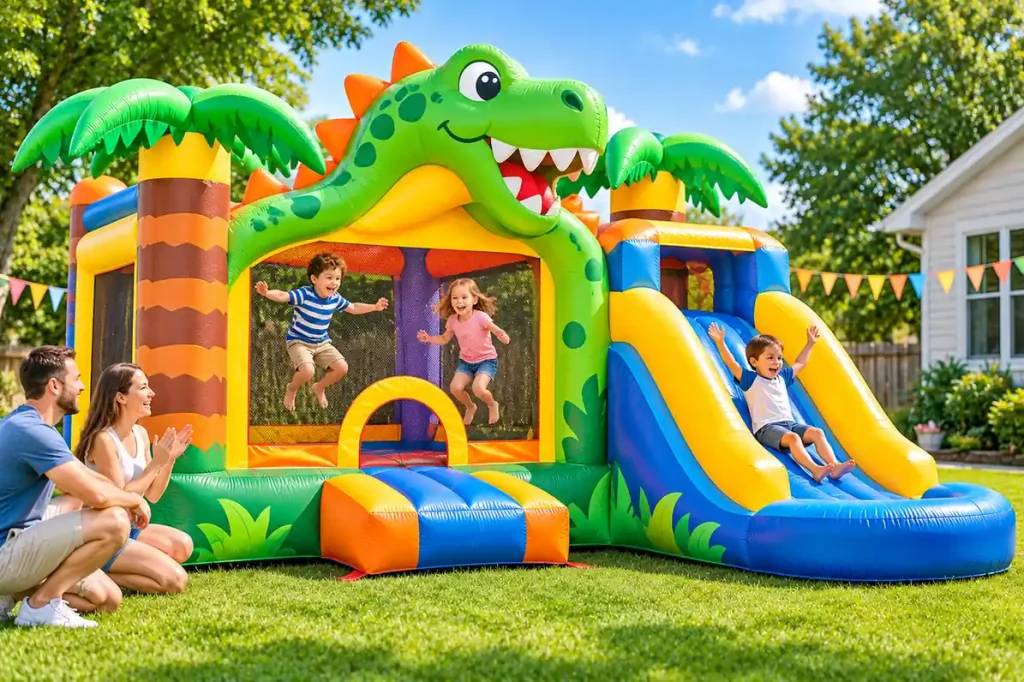
A bounce house with an integrated slide offers multiple activities in one unit.
Children can alternate between jumping and sliding, provided the product design and manufacturer instructions permit those activities.
Choose a model with appropriately separated activity areas and clear user-capacity guidance.
2. Climbing Features
Climbing walls or inflatable climbing sections can introduce an additional physical challenge.
Look for secure handholds, suitable incline angles, and properly designed transitions between activities.
Children should use these features only within the manufacturer's age, height, and weight restrictions.
3. Obstacle Course Elements
Some inflatable play structures include tunnels, barriers, and other obstacles.
These features can make play more engaging for older children, but they also require adequate supervision and a layout designed to reduce collisions.
4. Clear Entry and Exit Paths
As play becomes more active, accessible entrances and exits become especially important.
Avoid overcrowding and make sure children understand the rules for moving between different play areas.
Best choice: A bounce house combo with a spacious play area, integrated slide, and age-appropriate climbing or obstacle features.
Best Bounce House Features for Older Kids (Ages 9–12)
Older children may prefer more challenging activities and larger play structures. However, size and activity level must still match the manufacturer's approved user specifications.
1. Larger Play Areas
A larger inflatable may offer more room for movement, but the usable area should never be treated as permission to exceed the stated capacity.
Check the maximum number of users, individual weight limits, total weight capacity, and height restrictions.
2. Advanced Obstacle Courses
Obstacle course inflatables can offer a more structured play experience with tunnels, barriers, climbing sections, and slides.
These models may be suitable for supervised group activities when designed and rated for the intended age group.
3. Taller Slides
Older children may enjoy larger slides, but taller does not automatically mean better.
Evaluate slide design, manufacturer restrictions, landing areas, anchoring requirements, and surrounding clearance.
4. Heavy-Duty Construction
For energetic users, prioritize the quality of the complete product, including seams, enclosure attachments, anchoring points, blower compatibility, and structural design.
A product described as heavy-duty or commercial-grade should not be assumed to be suitable for every setting or age group.
Best choice: A manufacturer-approved inflatable with appropriate capacity, challenging play features, reliable construction, and sufficient installation space.
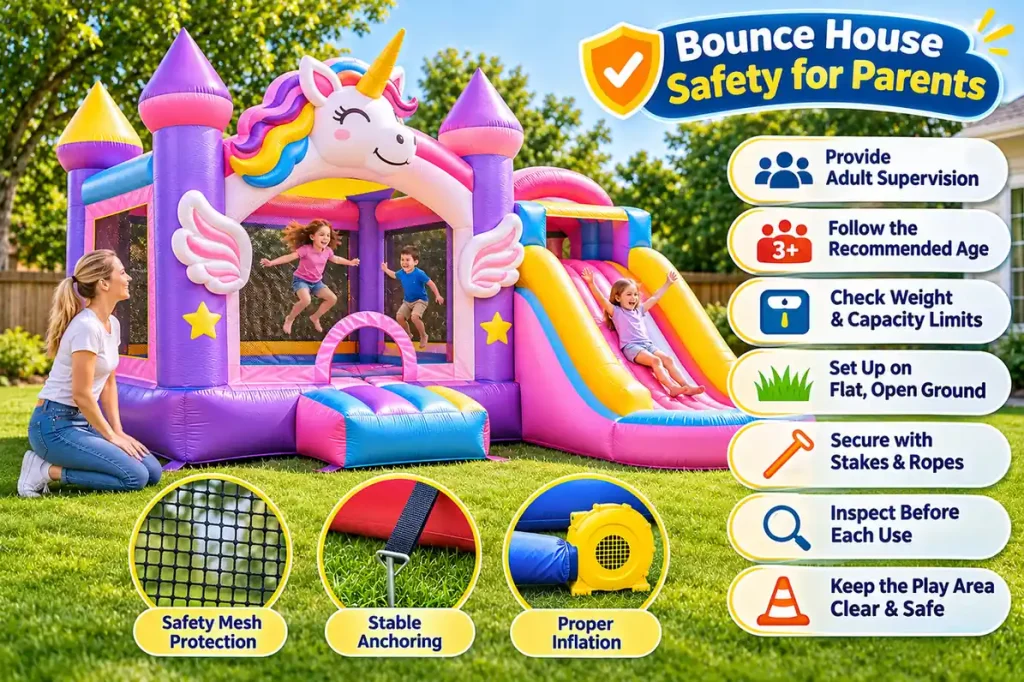
Essential Bounce House Safety Features for Every Age
Regardless of your child's age, safety should remain the first priority when selecting an inflatable bounce house.
Secure Mesh Enclosures
Protective mesh walls help define the play area and allow adult supervision. Inspect the enclosure and attachments before every use.
Proper Anchoring
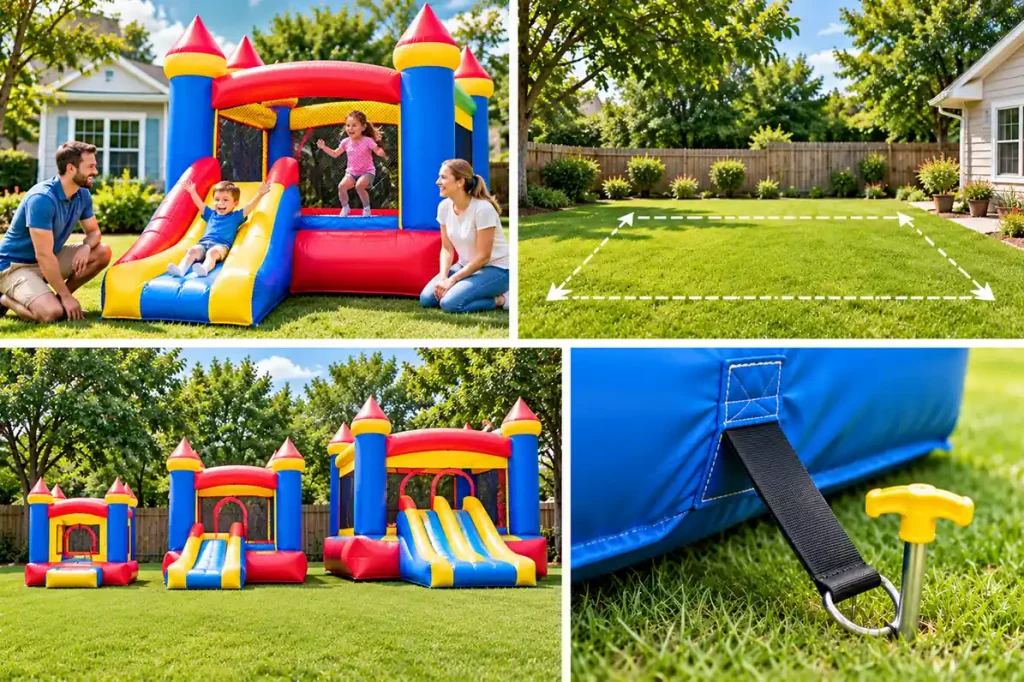
Outdoor inflatables must be anchored according to the manufacturer's instructions. Use all required stakes, tethers, or other approved anchoring components.
Never operate an inflatable in unsafe weather conditions or winds above the manufacturer's specified limit.
Appropriate Blower System
Continuous-air inflatables require a compatible blower operating as directed. Electrical components should be protected and connected according to the manufacturer's instructions.
Clear Safety Labels
Choose a product with readable instructions, age recommendations, capacity limits, and relevant safety warnings.
Adult Supervision
A responsible adult should actively supervise play at all times. Children should follow the manufacturer's rules, avoid roughhousing and flips, and never climb exterior walls or protective netting.
For additional guidance, parents can review resources from the U.S. Consumer Product Safety Commission (CPSC).
Bounce House Features Comparison by Age
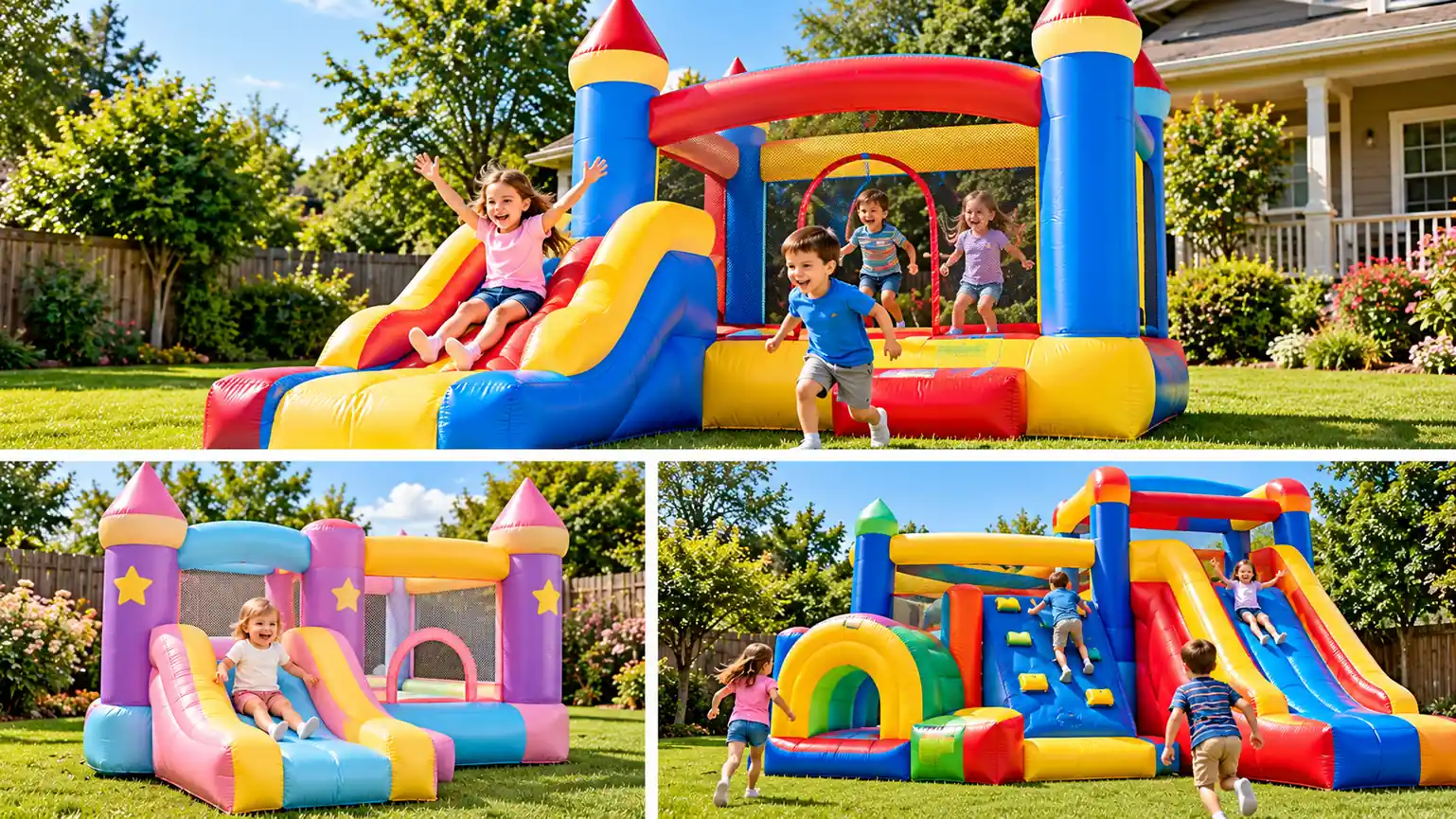
| Age group | Features to prioritize | Recommended play style |
|---|---|---|
| Ages 1–3 | Only manufacturer-approved equipment, low access, simple layout | Gentle, closely supervised activities |
| Ages 3–5 | Mesh enclosure, simple slide, interactive play | Imaginative and introductory active play |
| Ages 6–8 | Jumping area, combo slide, climbing features | Varied active play |
| Ages 9–12 | Larger approved capacity, obstacles, advanced slides | More challenging supervised play |
Age ranges are general shopping guidance, not product safety ratings. Always follow the age, height, weight, and capacity limits for the specific inflatable.
How to Choose the Right Backyard Bounce House
Beyond your child's age, several practical factors should influence your purchase.
Measure Your Backyard
Before purchasing, measure the available space and compare it with the product's inflated dimensions.
Allow additional room for the blower, anchoring system, entry and exit areas, and manufacturer-required clearance.
Consider the Number of Children
If siblings or friends will use the inflatable, check the occupancy limits and whether children of different sizes can play safely together.
Separate users when necessary to avoid collisions.
Think About Seasonal Use
Some inflatables are designed for dry use, while others include water-play features.
Never add water to a dry-use bounce house unless the manufacturer explicitly permits it.
Choose Features Your Children Will Enjoy
A colorful castle, simple jumping area, slide combo, or obstacle course can all be good options when they match the child's abilities and the product's intended use.
Instead of choosing the inflatable with the most features, focus on the features your family will actually use.
Why Families Choose NexWonder Inflatable Play Products
At NexWonder, we believe backyard play should inspire movement, imagination, and memorable family experiences.
Our inflatable play product range includes bounce houses, inflatable slides, obstacle courses, and water-play designs created for a variety of family activities.
We focus on thoughtful product design, material selection, quality control, and customer support to help families find inflatable play solutions suited to their needs.
Whether you're planning everyday backyard fun or a special family gathering, choosing the right inflatable begins with understanding your children's ages, interests, and available space.
Explore NexWonder bounce houses and inflatable play products to discover options for your family's next backyard adventure.
Frequently Asked Questions About Bounce House Features
What is the best bounce house for toddlers?
The best option is one specifically approved by the manufacturer for the child's age. Many bounce houses are not intended for children under three. For eligible young users, look for a simple layout, secure enclosure, easy access, and suitable capacity limits.
What bounce house features are best for preschoolers?
Preschoolers may enjoy a jumping area, a gentle slide, and simple interactive features. All activities should match the manufacturer's age recommendations and be used with active adult supervision.
Are bounce houses with slides better for older kids?
Bounce houses with slides can provide more activity variety, especially for children who enjoy multiple play features. However, slide height and design must be appropriate for the users and the manufacturer's specifications.
Can kids of different ages use the same bounce house?
Only when the product's instructions permit it and safe separation can be maintained. Children with significant differences in size or ability should generally use the inflatable separately to reduce collision risks.
What should parents look for in a durable bounce house?
Look at the full construction rather than fabric thickness alone. Review seams, enclosure attachments, anchoring points, blower compatibility, manufacturer instructions, and applicable safety information.
Are water-slide bounce houses suitable for year-round use?
Not necessarily. Water-play inflatables should be used only in appropriate weather and under the manufacturer's specified conditions. A dry-use inflatable should not be converted into a water attraction without explicit manufacturer approval.
Final Thoughts: Find the Best Bounce House Features for Your Family
The best bounce house features for kids of different ages depend on more than appearance or size. Age suitability, safety, available space, and activity preferences all play an important role.
Younger children may benefit from simple, gentle play designs, while older children may enjoy slides, climbing sections, and obstacle courses. In every case, the manufacturer's requirements should guide the final decision.
With the right inflatable, your backyard can become a welcoming space for active play, family gatherings, and lasting childhood memories.
Ready to bring more excitement to your backyard? Explore NexWonder inflatable bounce houses and find an age-appropriate design for your family.
For additional safety information, parents can explore the U.S. Consumer Product Safety Commission (CPSC) for consumer product safety guidance and recalls. Families can also review HealthyChildren.org, a parenting resource from the American Academy of Pediatrics, for general child safety information.