How to Choose the Best Bounce House for Your Backyard

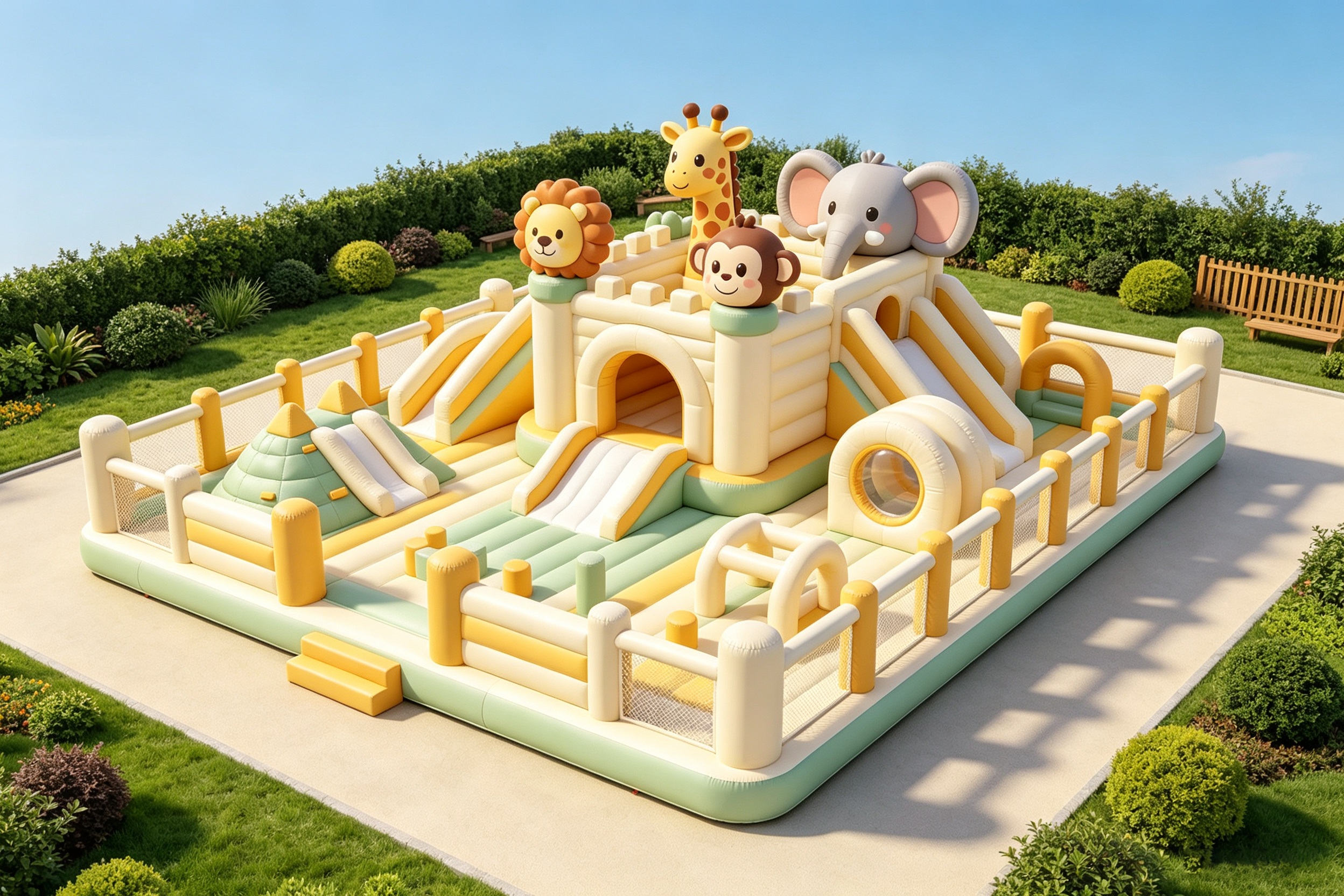
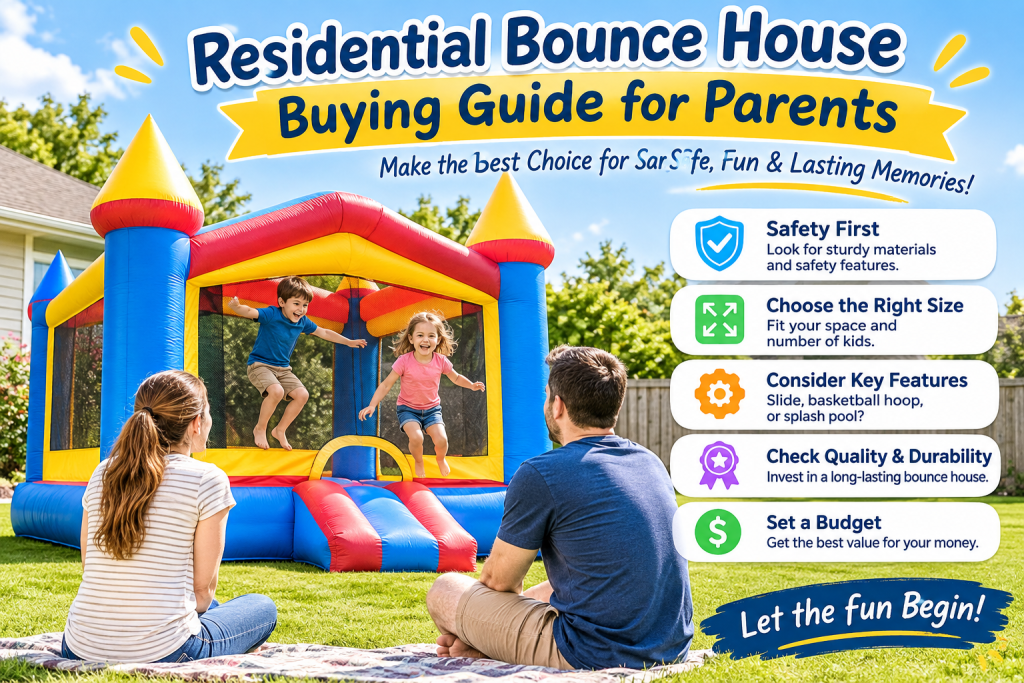
Choosing the best bounce house for your backyard is a great way to create a fun outdoor play space for your children. Whether you are planning birthday parties, family gatherings, or everyday outdoor activities, the right inflatable bounce house can provide hours of entertainment.
However, not all bounce houses are the same. Size, safety features, materials, available space, and your budget are all important factors to consider before making a purchase.
In this guide, we will explain how to choose the best bounce house for your backyard, what features to look for, and how to find an inflatable that fits your family's needs.
1. Measure Your Backyard Before Choosing a Bounce House
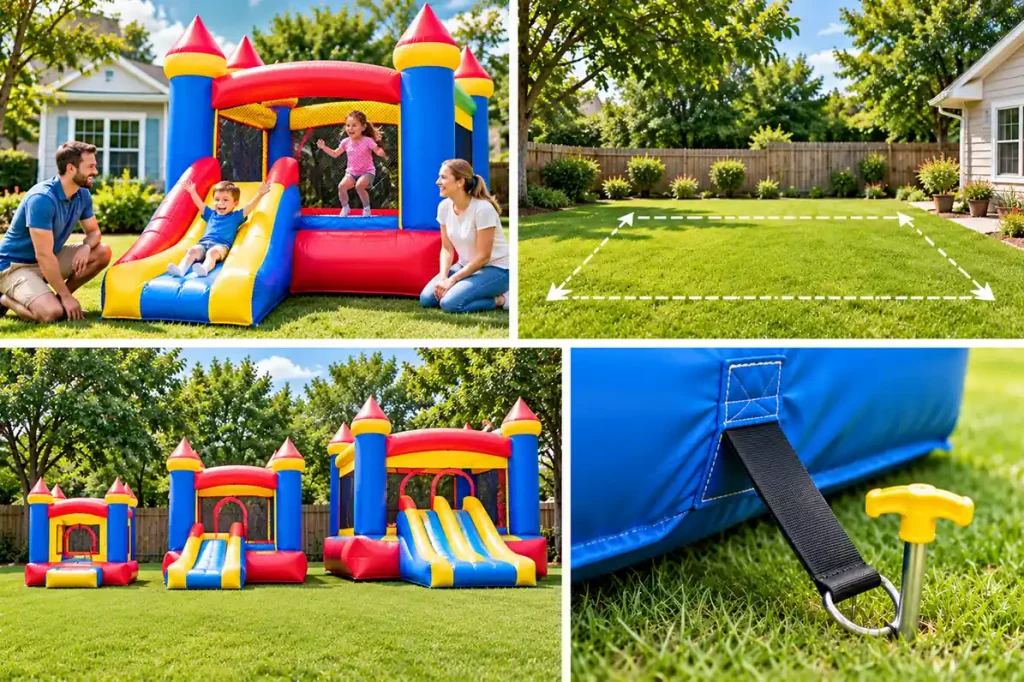
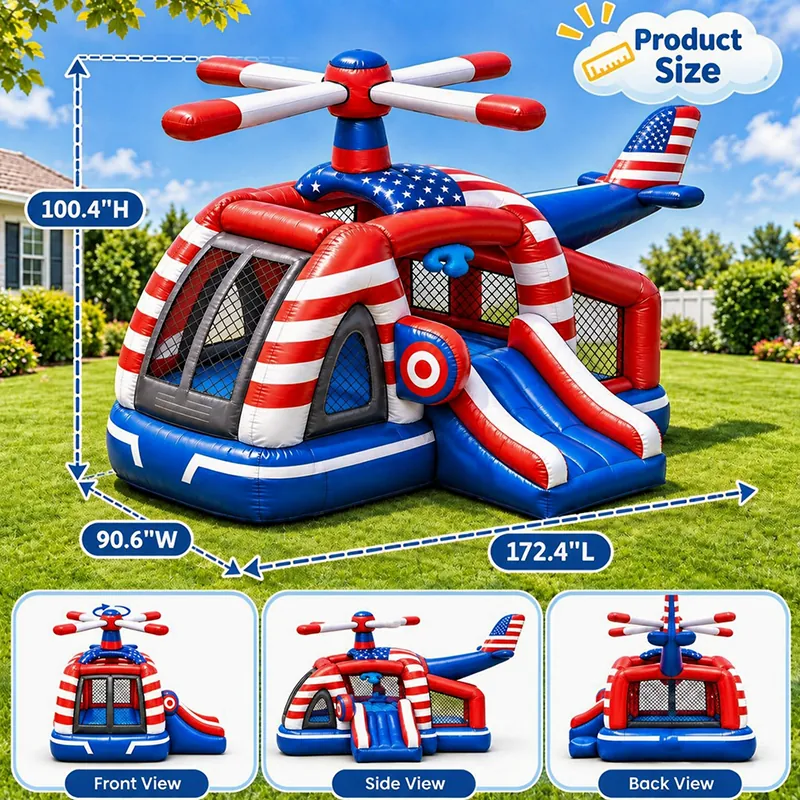
Before purchasing a backyard bounce house, measure your available outdoor space carefully. Choosing the right size helps ensure that children have enough room to play safely.
Small, Medium, or Large Bounce House?
Different bounce houses are designed for different spaces and activities.
Small bounce houses: Ideal for compact backyards and younger children, depending on the manufacturer's age and capacity guidelines.
Medium bounce houses: A practical option for many families who want a balance between play space and yard space.
Large bounce houses: Suitable for spacious backyards, family parties, and larger play areas when the product's capacity and installation requirements are met.
Remember that the inflatable itself is not the only space you need to consider. You also need sufficient clearance around the unit, space for the blower and electrical connections, and room for proper anchoring.
Always follow the manufacturer's setup and clearance instructions.
Check the Ground Surface
The ground beneath your inflatable bounce house is just as important as its size.
Grass may be suitable for some residential inflatables when the ground is level and the product's anchoring requirements can be met. Concrete and other hard surfaces may require specific protective measures and approved anchoring arrangements.
Before setting up your bounce house, check for rocks, sharp objects, slopes, holes, and overhead obstacles such as tree branches and power lines.
2. Choose the Right Bounce House for Your Children's Age
The best bounce house for your backyard should match the ages, sizes, and abilities of the children who will use it.
Bounce Houses for Toddlers and Younger Children
Younger children may benefit from a smaller inflatable with a simple jumping area, low entry point, and age-appropriate play features.
Look for clearly stated age recommendations, maximum user limits, and individual weight restrictions where applicable. Adult supervision is essential, and younger children should not share a bouncing area with much larger children when the manufacturer advises against it.
Bounce Houses for Older Children
Older children may enjoy larger jumping areas, climbing features, slides, and interactive play elements.
Before choosing a more complex design, confirm that the inflatable is suitable for the intended age group and that the installation area can accommodate its full dimensions.
Bounce Houses for Families With Children of Different Ages
If several children will use the inflatable, consider a design that provides an appropriate play area for the intended users.
Separate play zones can be useful when available, but they do not replace supervision or the manufacturer's capacity and age restrictions.
3. Decide Which Bounce House Features You Need
One of the most important steps in choosing the best bounce house for your backyard is deciding which features your family will actually use.
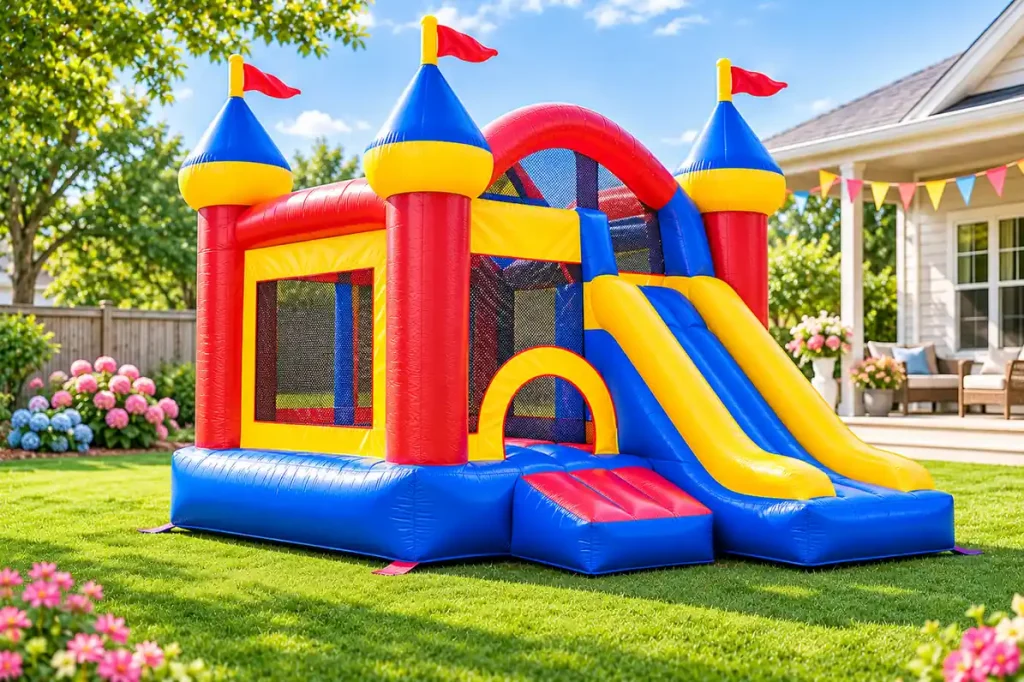
Traditional Inflatable Bounce House
A traditional bounce house focuses on jumping and bouncing. Its straightforward design may be a good choice for families who want an inflatable for everyday play and occasional birthday parties.
This style can also be practical when backyard space is limited.
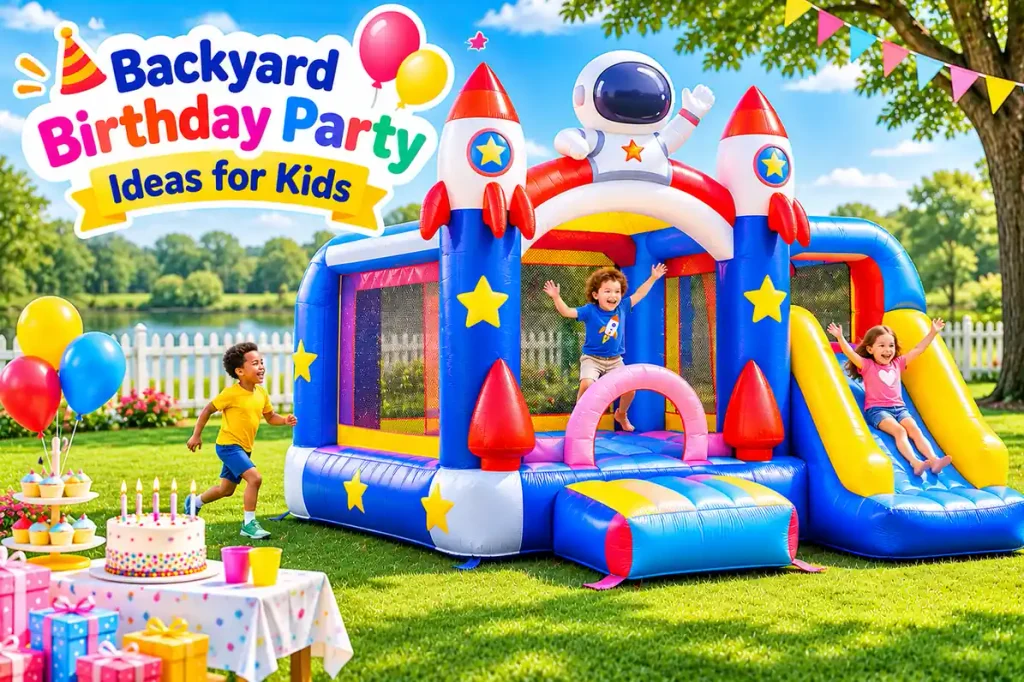
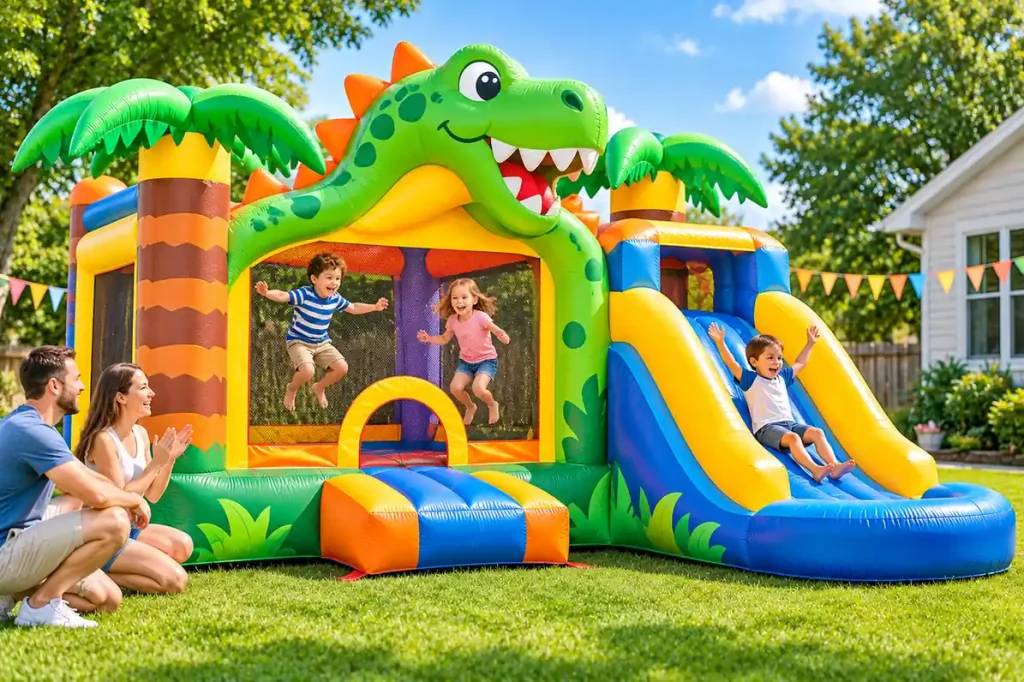
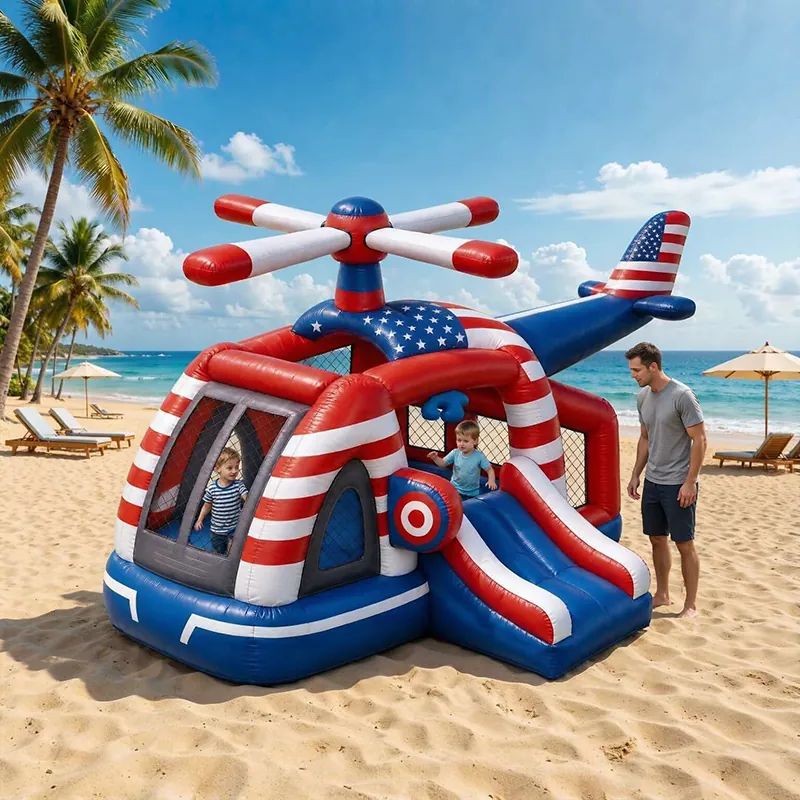
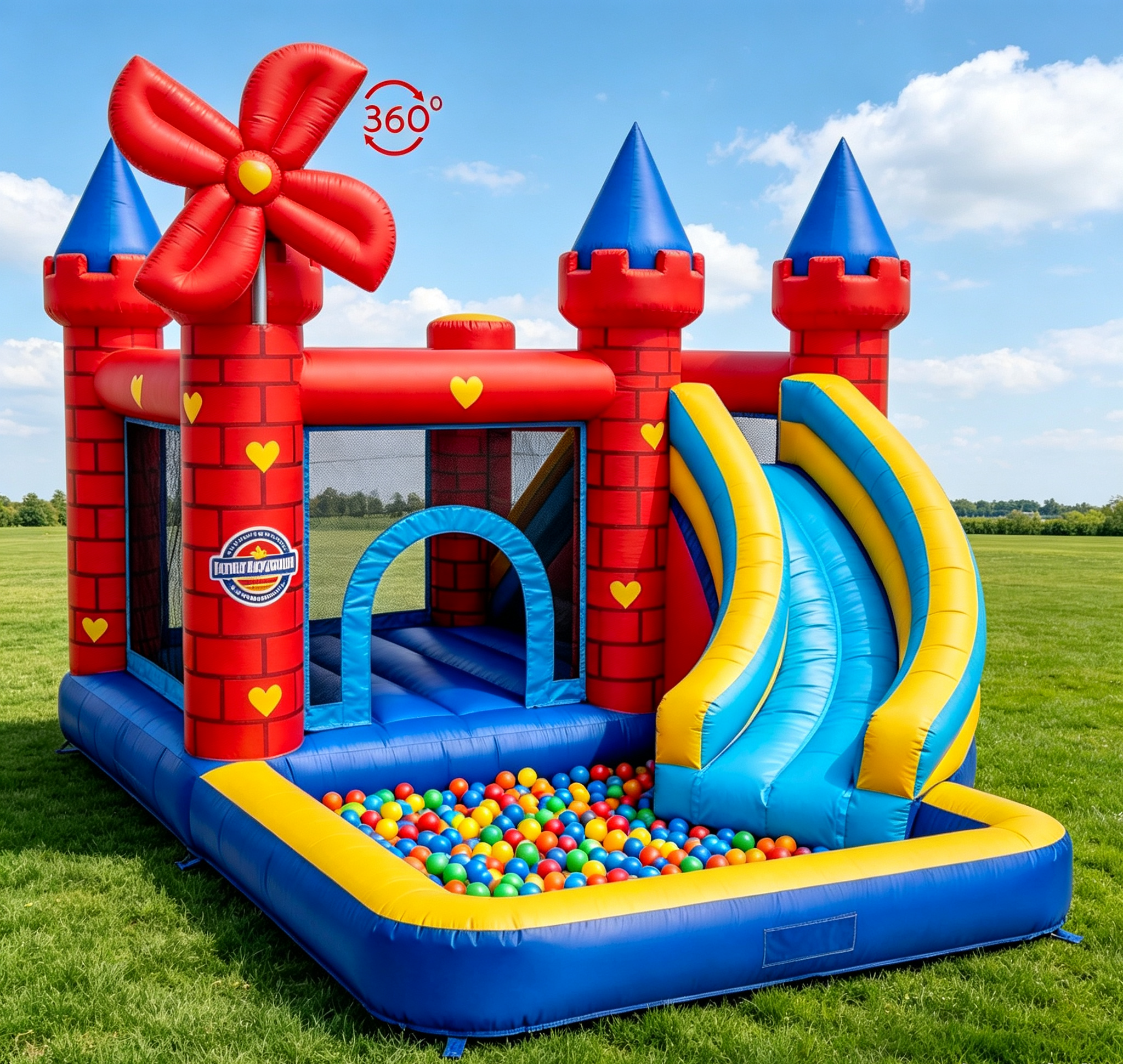
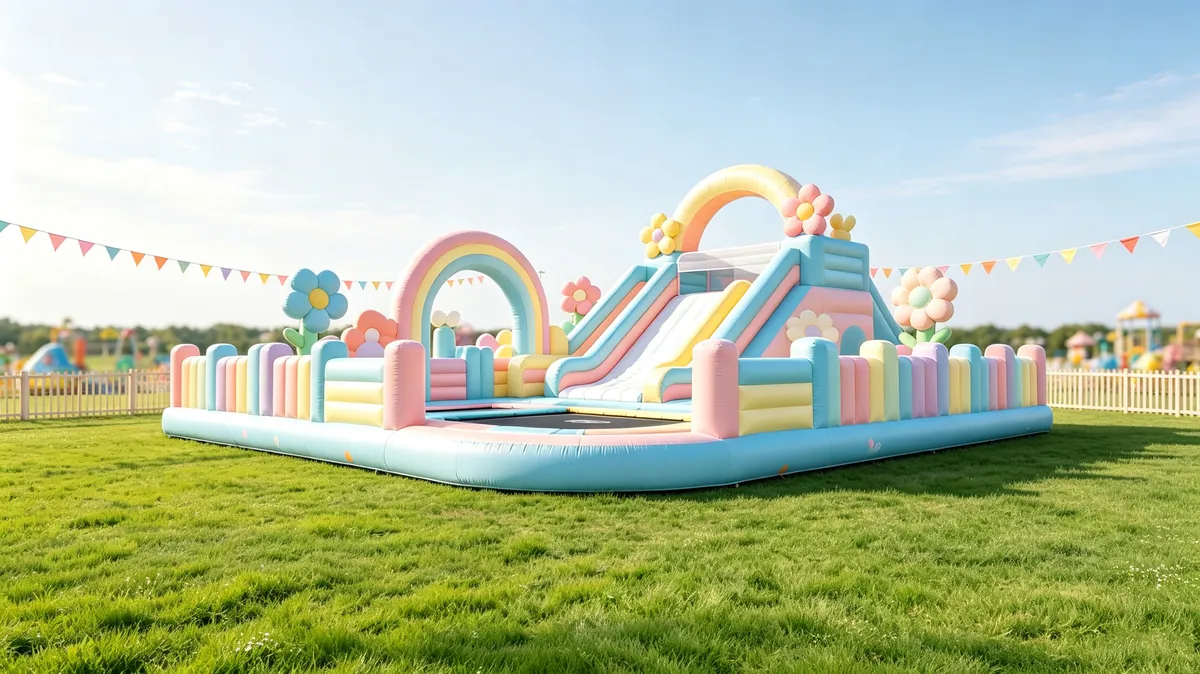
Bounce House With a Slide
A bounce house with a slide adds another activity to the play area. Some models feature a climbing section, an inflatable slide, and a landing area.
Before purchasing one, check the overall dimensions, slide height, water-use requirements if applicable, and the space needed for safe entry and exit.
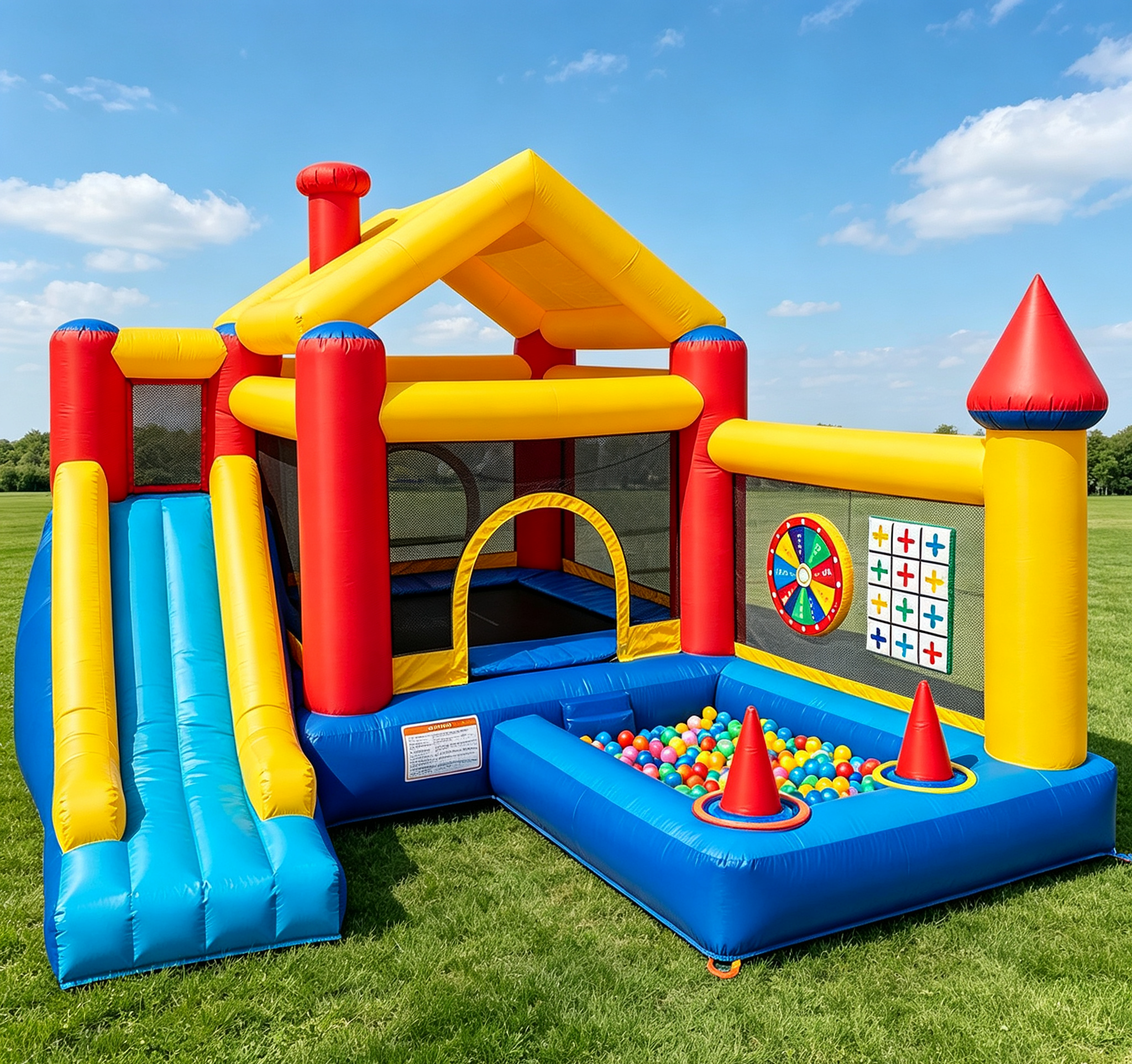
Bounce House With a Basketball Hoop or Other Games
Some inflatable play centers include basketball hoops, obstacle elements, or other interactive features. These designs can offer more variety for children who enjoy active games.
Choose features based on the children's interests and the amount of space available rather than simply choosing the model with the most accessories.
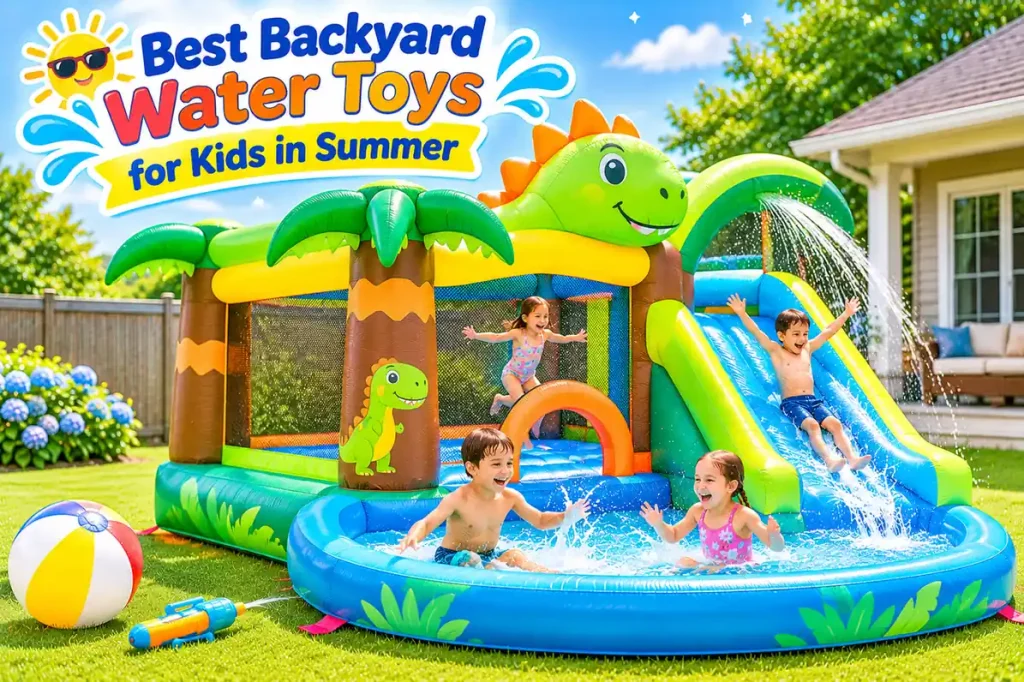
Water Bounce House
A water bounce house may be suitable for families who want outdoor water play during warm weather.
Confirm whether the product is specifically designed for water use, whether a garden hose is required, and how water drainage and electrical safety are managed. Never assume that a standard dry-use inflatable is suitable for water.
4. Check the Materials and Build Quality
Material quality is an important consideration when comparing backyard bounce houses. The right construction depends on the intended use, product design, and manufacturer's specifications.
Look for Durable Materials
When comparing inflatable products, review the material description and construction details.
Consider the following:
Material type and thickness, where specified.
Reinforced seams and stress points.
Quality of stitching and fabric connections.
Durability of entry points, climbing areas, and slides.
Manufacturer guidance for cleaning, drying, storage, and repairs.
A heavier or thicker material is not automatically better in every situation. Overall construction quality and suitability for residential use also matter.
Check the Blower and Accessories
Many inflatable bounce houses require a blower to remain inflated during use. Confirm whether the correct blower is included and review its electrical requirements.
Also check whether the package includes the necessary stakes, storage bag, repair kit, and setup instructions.
Missing accessories can increase the total cost and make setup more difficult.
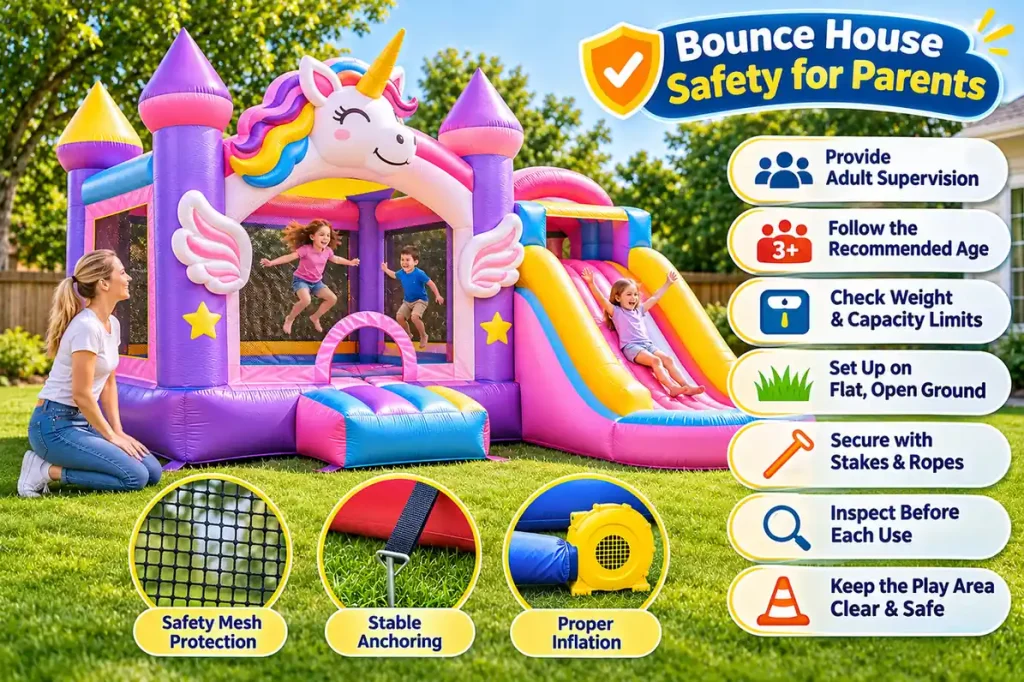
5. Put Bounce House Safety First
Safety should be a priority when choosing and using a backyard bounce house. A visually appealing design is not enough; the inflatable must also be appropriate for the intended users and installation conditions.
Review Safety Instructions and Capacity Limits
Before purchasing, read the manufacturer's safety instructions and check the stated age range, maximum number of users, weight limits, and other restrictions.
Do not exceed the manufacturer's limits. Children should be supervised by a responsible adult throughout use.
Anchor the Bounce House Correctly
Proper anchoring helps prevent an inflatable from shifting or lifting during use. Use the anchoring system specified by the manufacturer and ensure it is appropriate for the installation surface.
Do not assume that a few ordinary garden stakes will be sufficient for every product or ground condition.
Check the Weather Before Every Use
Wind, rain, and thunderstorms can make inflatable play equipment unsafe.
Follow the manufacturer's wind-speed limits and weather instructions. Stop use and deflate the inflatable when conditions exceed those limits or when instructed by the manufacturer. Never use an inflatable during thunderstorms.
Inspect the Inflatable Regularly
Before each use, inspect the fabric, seams, blower connections, anchoring points, and surrounding play area.
Stop using the inflatable if you find damage, unstable anchoring, abnormal inflation, or another condition that could affect safety.
6. Set a Budget for Your Backyard Bounce House
Bounce house prices vary according to size, materials, design, features, and included accessories. Rather than choosing based on price alone, compare the total cost with the product's intended use.
Compare the Total Cost
When reviewing different models, consider:
The purchase price.
Shipping and delivery charges.
The required blower and accessories.
Storage space and maintenance requirements.
Replacement parts and repair options, where available.
A model with a lower advertised price may not offer the same features or included equipment as another model.
Think About Long-Term Value
If your family plans to use a bounce house regularly, consider how easy it is to clean, dry, store, and inspect.
For occasional birthday parties, a simpler model may be sufficient. For frequent outdoor play, you may prefer a design with more play features or construction details suited to your intended use.
The best value is the product that meets your family's needs without compromising safety or exceeding your available space.
7. Choose a Bounce House That Fits Your Backyard Lifestyle
The best backyard bounce house depends on how you plan to use it.
For everyday play, a compact design may be convenient. For birthday parties, a larger model with additional play features may be more appealing if your yard can accommodate it. For summer activities, a water-specific inflatable may provide another way to enjoy outdoor play.
Before making your final decision, compare the product dimensions, age recommendations, capacity limits, materials, included accessories, and setup requirements.
A little planning can help you select an inflatable that suits your space and provides enjoyable outdoor activities for your family.
8. Why Choose NexWonder for Your Backyard Bounce House?
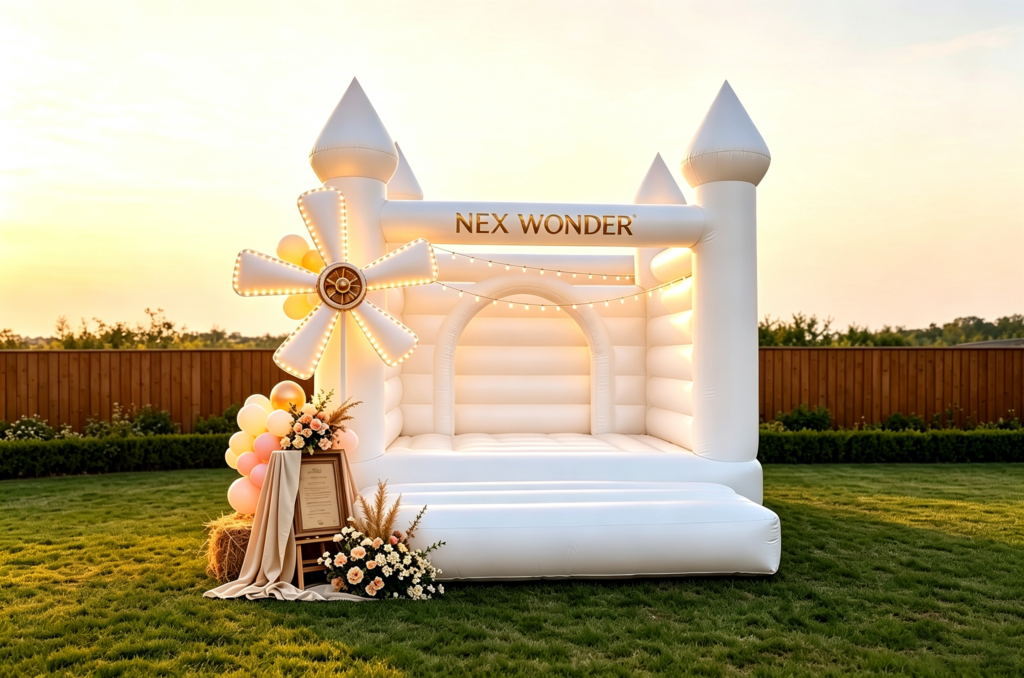
At NexWonder, we understand that families want inflatable products that combine fun, practical design, and thoughtful product selection.
When exploring our inflatable collection, consider the size of your backyard, the ages of the intended users, and the features that best fit your family's activities.
Whether you are looking for a classic jumping area or an inflatable with additional play features, comparing product specifications can help you make a more informed decision.
Explore our collection to find an inflatable design that fits your outdoor space and planned activities.
Ready to create a fun backyard play space? Browse the NexWonder collection and discover options for your family's next outdoor adventure.
Frequently Asked Questions About Backyard Bounce Houses
1. What size bounce house is best for a backyard?
The best size depends on your available space, the intended users, and the manufacturer's clearance requirements. Measure your yard before choosing a model and leave sufficient room for anchoring, the blower, and safe access.
2. How much space do I need for a backyard bounce house?
You need enough room for the inflatable's full dimensions plus the additional clearance specified by the manufacturer. Check the product's length, width, height, anchoring requirements, and overhead clearance before installation.
3. What is the best material for a residential bounce house?
The best material depends on the product's intended use and construction. Compare material specifications, reinforced seams, stress-point construction, and the manufacturer's care instructions rather than relying on material thickness alone.
4. Are backyard bounce houses safe for toddlers?
Some bounce houses are designed for younger children, but not every model is suitable for toddlers. Check the manufacturer's age and capacity limits, provide continuous adult supervision, and prevent play with older or significantly larger children when required by the safety instructions.
5. Can I put a bounce house on concrete?
Only use a bounce house on concrete when the manufacturer permits that surface and provides an appropriate installation and anchoring method. Do not improvise an anchoring system or assume that the inflatable can be safely secured on every hard surface.
6. Can I leave a bounce house outside overnight?
Follow the manufacturer's instructions for outdoor exposure, deflation, drying, and storage. Weather, moisture, and changing conditions can affect the product, so leaving it outside overnight should not be assumed to be safe or appropriate.
7. How do I maintain a backyard bounce house?
Inspect the inflatable before each use, clean it according to the manufacturer's instructions, allow it to dry completely before storage when required, and check the seams, fabric, blower, and anchoring equipment regularly.
8. How do I choose between a bounce house and a bounce house with a slide?
A traditional bounce house may be suitable for families who mainly want a jumping area. A model with a slide provides additional activities but usually requires more space. Compare the dimensions, age limits, safety instructions, and intended use before deciding.
Final Thoughts
Choosing the best bounce house for your backyard involves more than selecting a fun design. The right inflatable should fit your available space, suit the children's ages, offer appropriate construction, and meet the manufacturer's installation and safety requirements.
By comparing size, features, materials, safety instructions, and overall cost, you can make a more informed choice for your family's outdoor play area.
Explore NexWonder's inflatable collection and find a design that matches your backyard and your family's needs.