
Bounce House Safety Checklist for Parents: How to Keep Backyard Inflatables Fun and Injury-Free

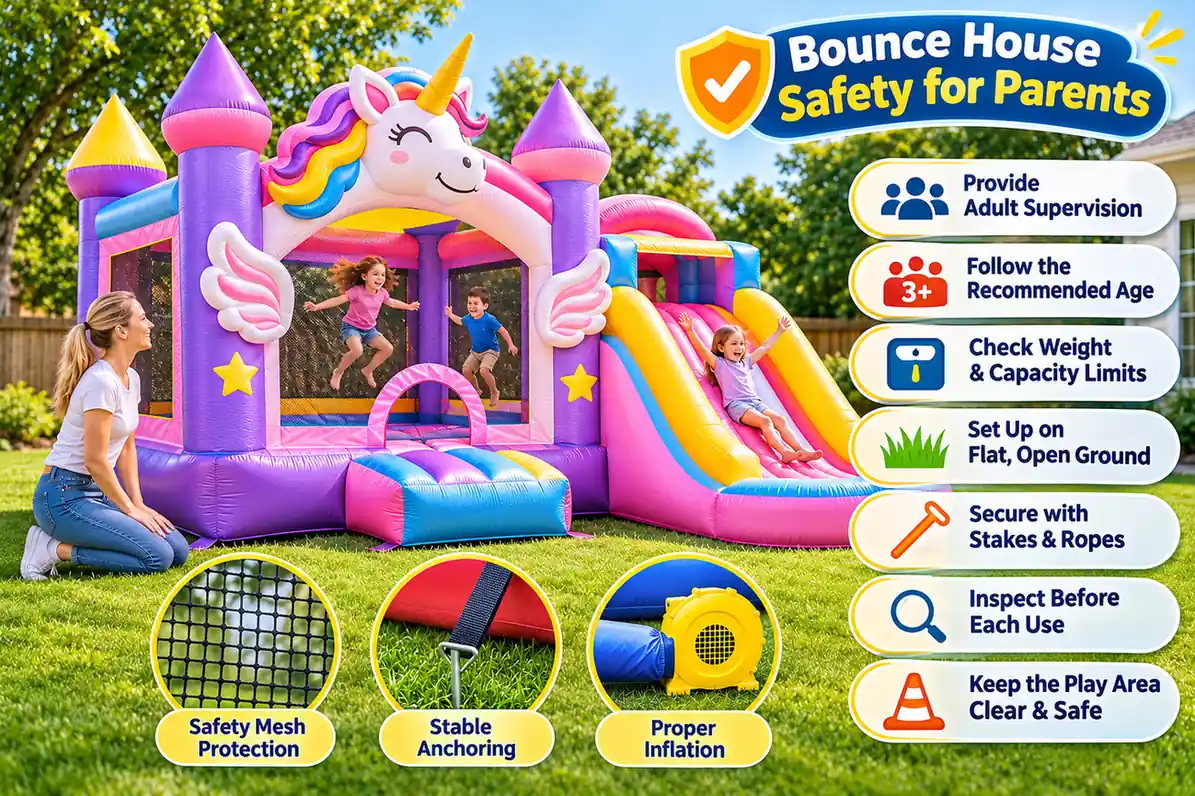
Bounce houses are an absolute highlight at birthday parties, neighborhood gatherings, and backyard celebrations. However, uncontrolled bouncing, rough play, and overcrowding can turn an afternoon of fun into an emergency room visit if proper precautions aren’t in place.Planning a party with inflatables brings unlimited fun for kids, but keeping playtime secure requires a clear bounce house safety checklist. In this guide, we break down essential rules every parent needs to know before letting children jump.
According to data tracked by the U.S. Consumer Product Safety Commission (CPSC), inflatable-related injuries—ranging from broken bones and sprains to concussions—send thousands of children to the hospital every year. Fortunately, the vast majority of these accidents are entirely preventable with the right preparation and oversight.
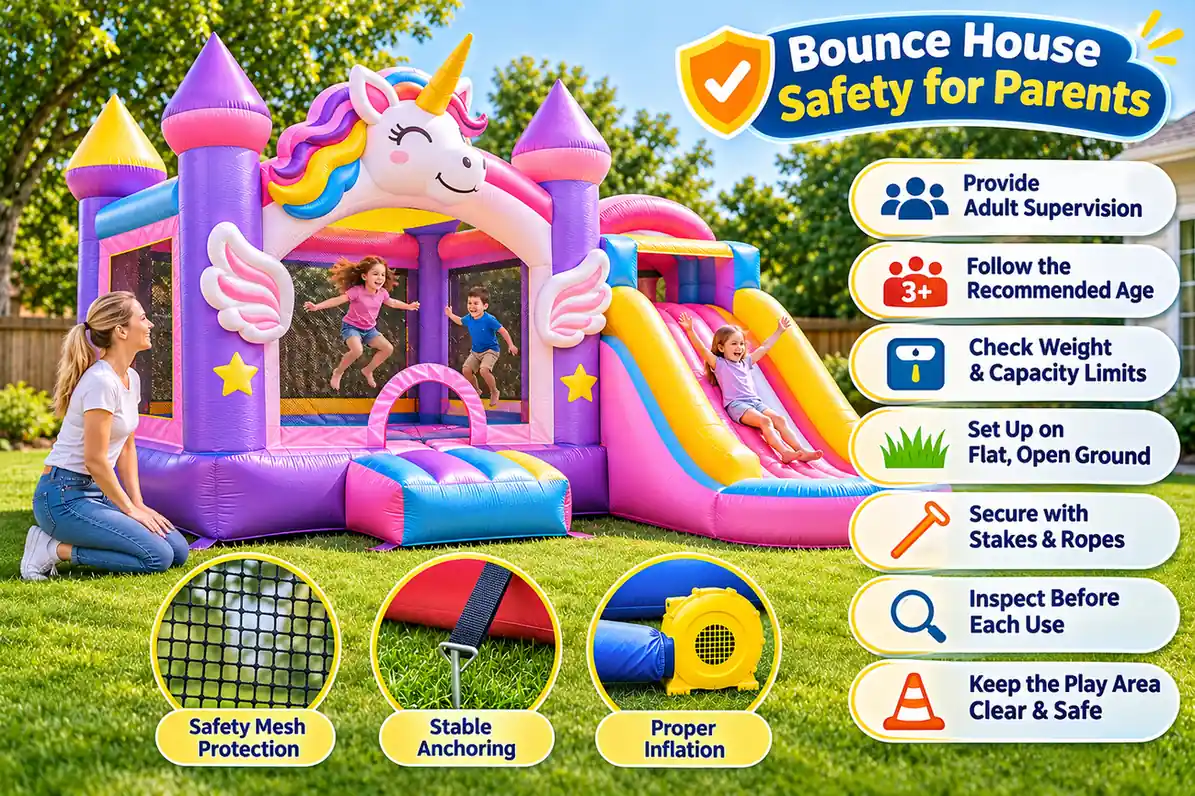
Before the kids take off their shoes and jump in, use this comprehensive checklist to ensure your equipment is safe, the site is secured, and ground rules are enforced.Reviewing this bounce house safety checklist before every birthday party keeps children safe.
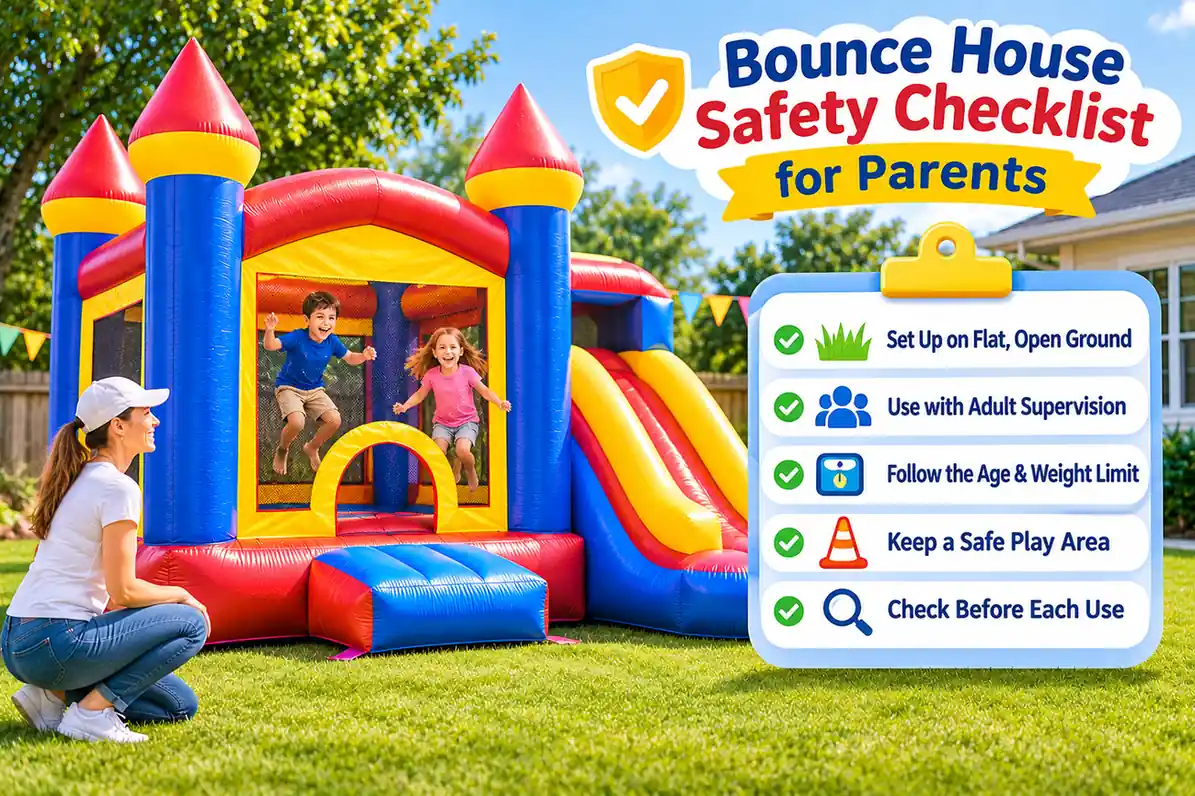
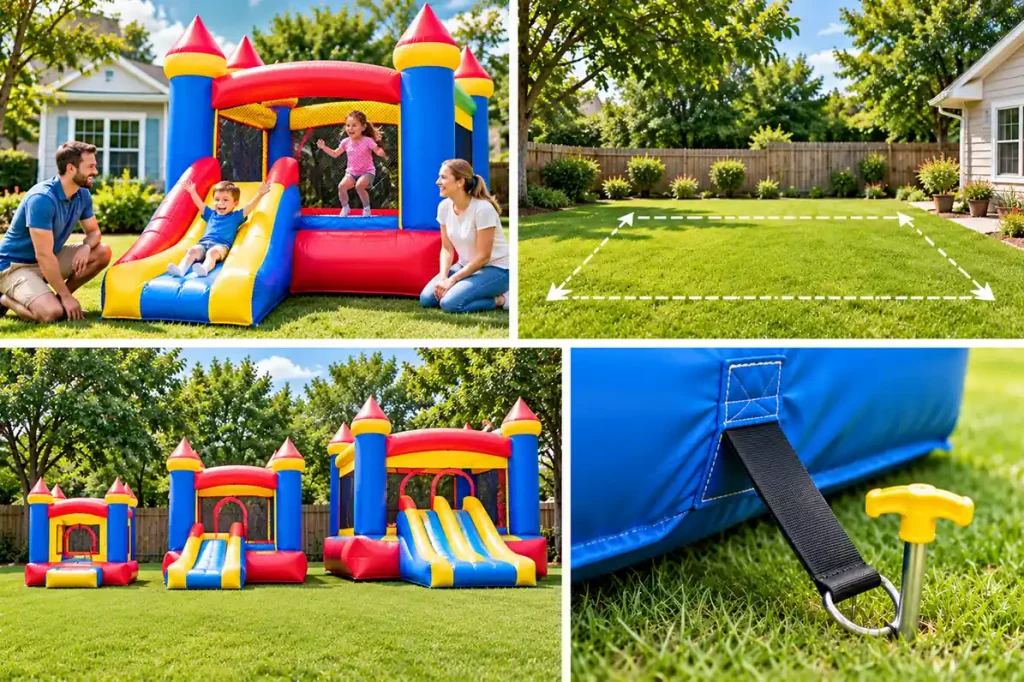
As outlined in our bounce house safety checklist, secure anchoring with heavy-duty stakes is non-negotiable.
Phase 1: Pre-Rental & Equipment Inspection Complete Bounce House Safety Checklist for Backyard Play
Safety begins long before the blower turns on. If you are hiring an inflatable operator, take time to verify their equipment standards and credentials:
Commercial Insurance and Licensing: Make sure the rental vendor holds active commercial liability insurance and meets local or state amusement inspection guidelines.
Fabric and Seam Integrity: Inspect the vinyl before inflation for structural tears, worn seams, fraying tie-down loops, and damaged safety netting.
Electrical and Blower Standards: Ensure the air blower is commercial-grade with a grounded three-prong plug. It should connect directly to a dedicated GFCI (Ground Fault Circuit Interrupter) outlet rather than a tangle of light-duty indoor cords.
Emergency Exit Functionality: Verify that deflation zippers and emergency roof escape flaps are fully operational, intact, and securely fastened prior to use.
Planning a broader outdoor event? Check our detailed guide on how to select safe event rentals and backyard equipment to match inflatable dimensions with your available yard space.
Phase 2: Site Setup and Ground Anchoring
Improper anchoring is the leading cause of catastrophic inflatable accidents, especially during unexpected wind shifts.
Full Perimeter Anchoring: Standard turf setups require heavy-duty steel stakes (typically 12 to 18 inches long) driven completely into the ground at every single anchor point provided by the manufacturer.
Hard Surface Ballast: When setting up on concrete, asphalt, or pavers where stakes cannot penetrate, secure each anchor point with certified heavy sandbags or water weights matching the manufacturer’s specified load (often 50 to 100+ pounds per corner).
Buffer Zone Clearance: Maintain at least a 6-foot clear perimeter on all sides of the inflatable, keeping it well away from fences, walls, low-hanging tree branches, and electrical wires.
Padded Landing Areas: Place shock-absorbing safety mats directly at the entrance ramp and exit steps to cushion accidental slips and tumbles.
Phase 3: Weather and Wind Protocol
Inflatables catch wind easily and can tip or lift off the ground without warning.
The 15 to 20 MPH Threshold: Most commercial inflatables must be evacuated and fully deflated immediately if sustained wind speeds or gusts reach 15 to 20 mph.
Continuous Forecast Monitoring: Keep track of real-time local conditions throughout the event using reliable radar tools like the National Weather Service.
Rain and Lightning Shutdown: Wet vinyl surfaces turn slick rapidly, increasing the likelihood of neck and joint hyperextensions. At the first sign of rain showers or thunder, clear the inflatable and disconnect power.
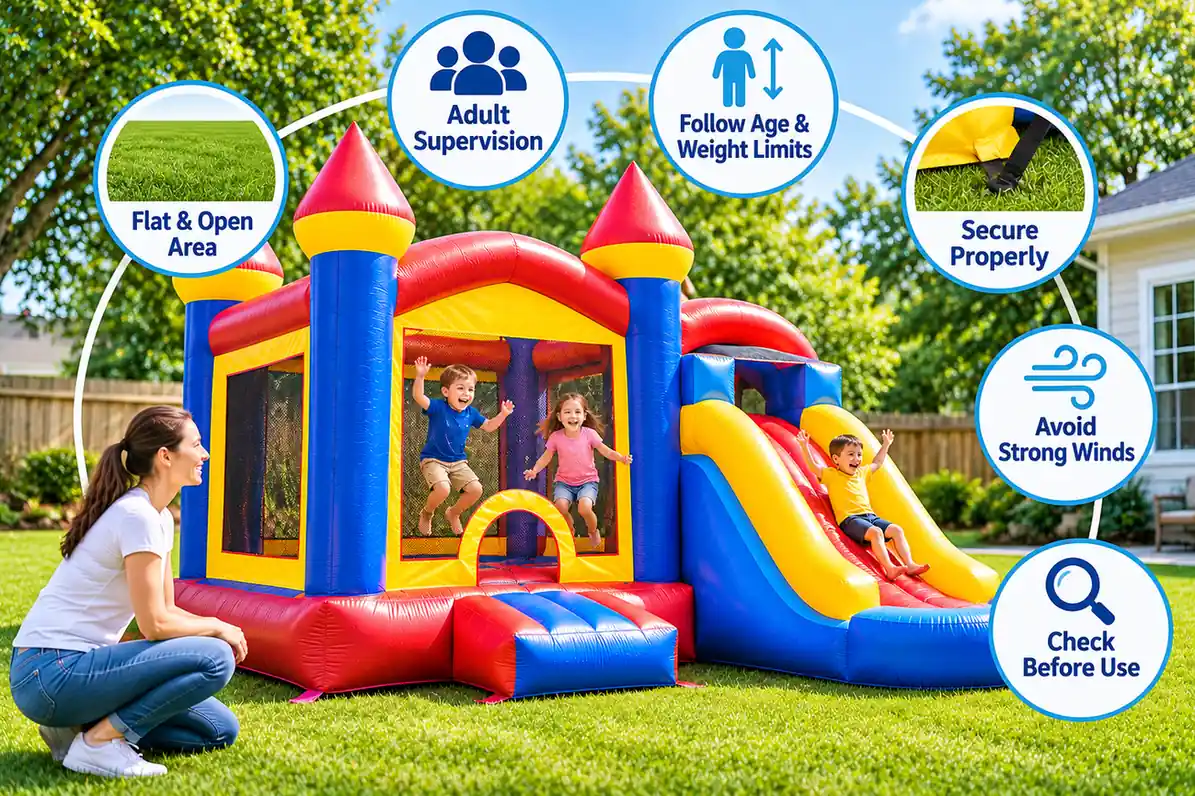
Phase 4: Ground Rules for Jumpers
Before opening the entryway, explain basic safety rules clearly to all participants:
Mandatory Removals: Shoes, eyeglasses, jewelry, hard hair accessories, and belts must come off. Pockets must be emptied of keys, coins, and sharp toys.
No Roughhousing: Ban flips, somersaults, wrestling, and diving headfirst into the structure or against side walls.
Zero Food or Drink: Keep food, beverages, hard candy, and chewing gum outside to prevent severe choking hazards during active play.
Orderly Exits: Remind children not to jump off the ramp onto the ground; they should slide or walk down feet-first.
Hosting a wide range of age groups? Explore our guide to safe outdoor entertainment and games for toddlers to keep little ones engaged away from larger, higher-impact bounce houses.
Phase 5: Active Supervision and Crowd Control
A bounce house should never function as an unmonitored play space. Active adult supervision is essential to prevent collisions.
- Assign a Dedicated Monitor: Designate a responsible adult whose single job is watching the bounce house door and interior. Never leave the station unattended without an explicit handoff to another adult.
- Enforce Strict Capacity and Weight Limits: Strictly adhere to the manufacturer-specified maximum load and single-rider weight limits printed on the warning label.
- Separate by Age and Size: Never mix toddlers with older kids, teens, or adults. Significant weight differences create uneven bounce rebounds that frequently cause leg fractures in smaller children.
- Monitor Inflation Airflow: Keep an eye on the inflation blower and air tube. If the blower loses power or the tube twists shut, promptly guide all children out before the roof begins to sag.
Phase 6: Quick Safety Run-Through
Before allowing anyone to jump, run through this final checklist to verify every point has been addressed:
The ground is level and thoroughly cleared of rocks, roots, and sharp sticks.
All tie-down points are securely anchored with steel stakes or rated ballast weights.
Blower cords are routed safely, covered to prevent tripping, and plugged into a GFCI outlet.
Entry mats are placed flat on the ground below the access ramp.
Current and forecasted wind speeds remain safely below the 15 to 20 mph cutoff.
Jumpers have removed all shoes, jewelry, glasses, and pocket items.
Kids are divided into groups of comparable age, height, and weight.
A designated adult monitor is standing by the entrance before jumping begins.
A backyard bounce house can be the highlight of any celebration when safety measures are treated as non-negotiable. By securing the perimeter, respecting weather boundaries, and maintaining continuous adult supervision, you can keep the party exciting and accident-free.Following an inflatable bounce house safety checklist ensures you never exceed manufacturer weight limits.
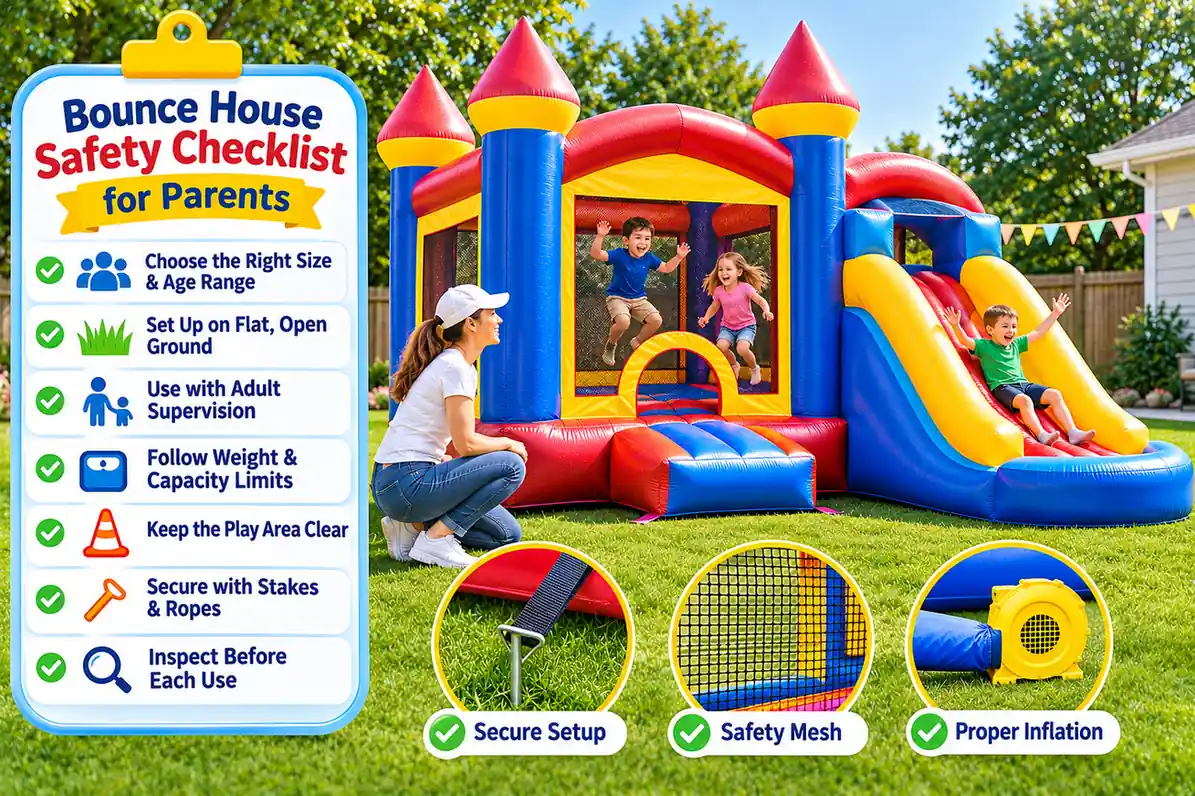
If you are currently organizing an event and need professional setup guidance, take a look at our commercial bounce house rental options or reach out to our event planning team for personalized recommendations.Bookmark this bounce house safety checklist to share with other parents and party guests.