
What Size Bounce House Do I Need? 5 Easy Steps to Pick the Best Fit

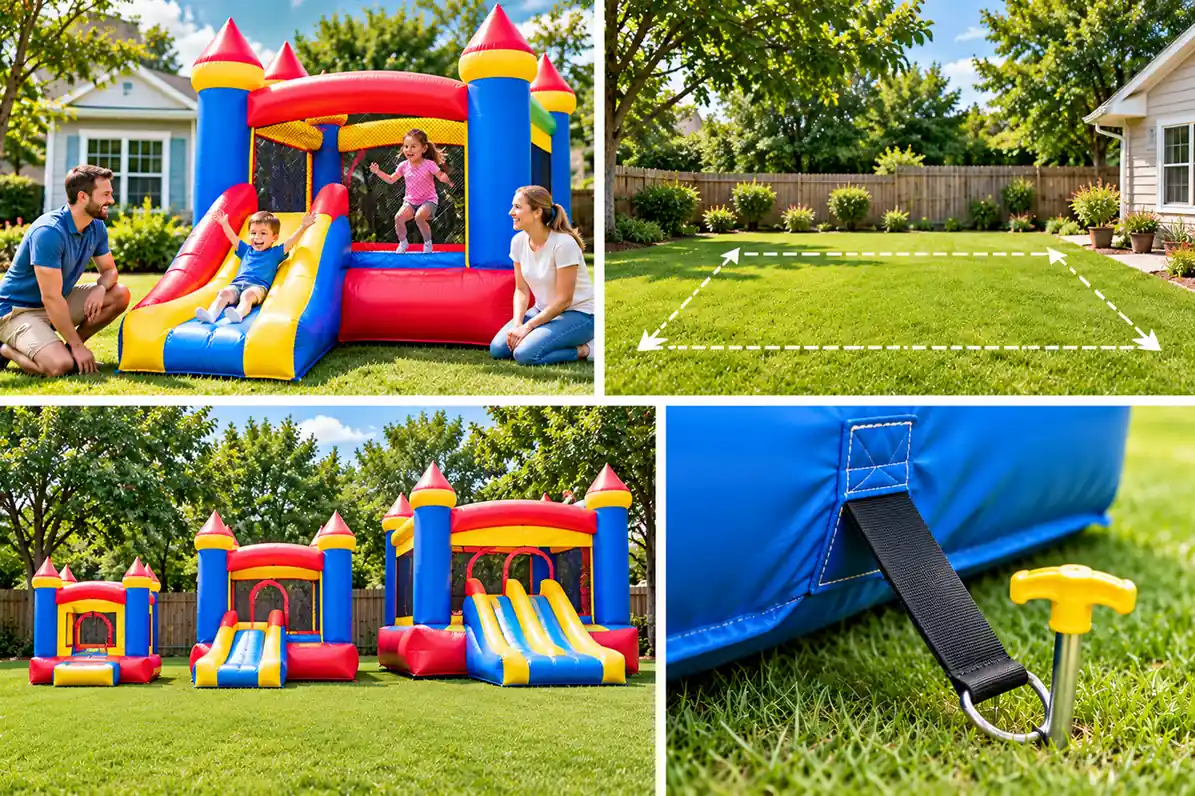
Finding the right backyard attraction can turn a standard weekend or birthday party into an unforgettable event. However, one common mistake homeowners make is buying or renting an inflatable unit without evaluating their available space.
If you are asking, “What size bounce house do I need for my backyard?”, this guide breaks down dimensions, safety clearances, age considerations, and space planning to help you choose the ideal inflatable.
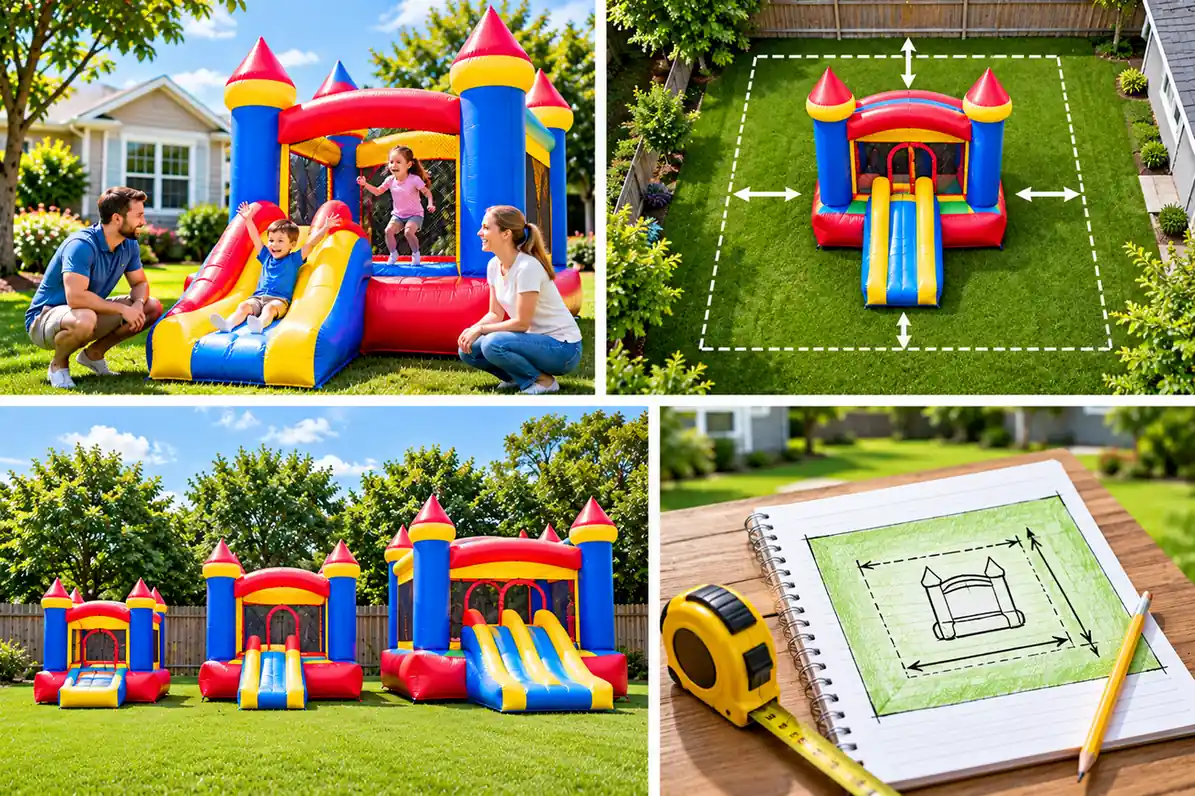
1. Understanding Bounce House Categories
Before taking out your measuring tape,what size bounce house do i need,identify whether your event requires a commercial-grade unit or an everyday home model:
- Residential Inflatables: A standard residential bounce house is constructed primarily from oxford cloth, woven nylon, or lightweight laminated PVC. These are designed for quick setup, easy folding, and typical family use. If you want something lightweight to inflate on weekends, a dedicated bounce house for home use provides the perfect balance of portability and budget.
- Commercial Inflatables: Built with heavy-duty 15-ounce to 18-ounce anti-tear PVC vinyl. They handle high traffic, adults, and heavy use, but weigh several hundred pounds and demand substantial clear yard area.
If your primary goal is birthday parties for neighborhood kids or regular summer fun for your children, a heavy-duty residential inflatable bounce house is usually the most practical choice.
2. Common Bounce House Dimensions and Age Ranges
When figuring out what size bounce house do Ineed, checking
child age and weight limits is essential.
,Instead of guessing, match the dimensions directly to the size and age of your jumpers:
- Mini / Toddler Units (7′ x 7′ to 9′ x 9′): These require roughly 13′ x 13′ of open yard space. They safely hold 2 to 3 toddlers (ages 1 to 4) and fit comfortably on small patios or narrow suburban lawns.
- Standard Residential Units (10′ x 10′ to 12′ x 12′): These models require approximately 16′ x 16′ to 18′ x 18′ of open lawn. They comfortably accommodate 3 to 5 young kids (ages 3 to 8) and represent the most popular size for everyday backyards.
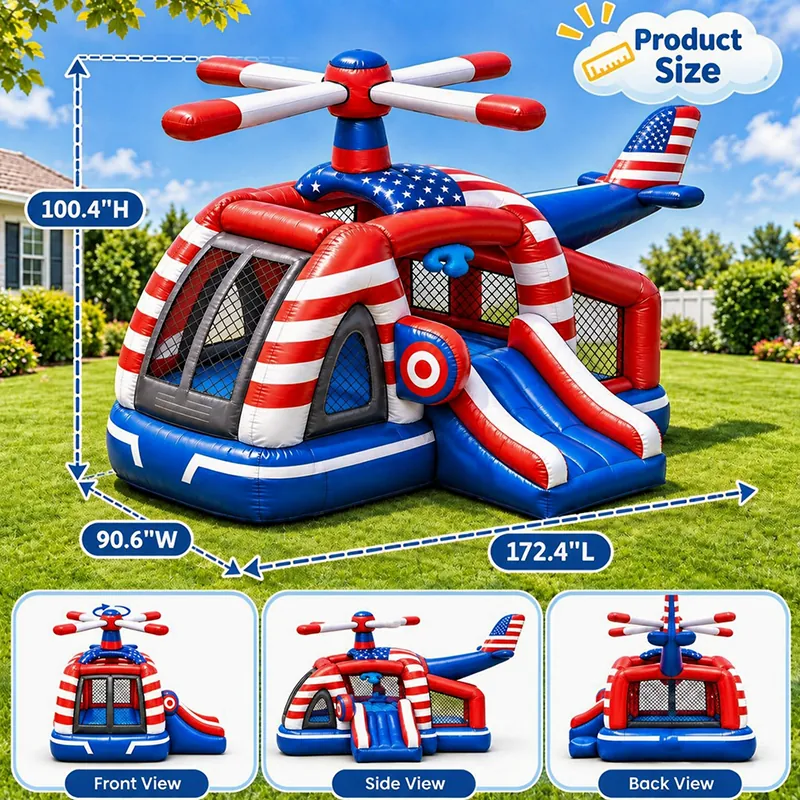
- Large Combo Units (13′ x 13′ to 15′ x 15′): Units featuring integrated slide attachments or climbing walls require at least 19′ x 19′ to 21′ x 21′ of ground space. They support 5 to 7 children (ages 5 to 12) and work best in medium-to-large lawns.
- Commercial / Event-Scale Units (15′ x 15′ to 20′ x 20’+): These demand 21′ x 21′ to 26′ x 26′ or more of open perimeter. They are designed for large gatherings, teens, and higher weight capacities.
3. The 3-Step Space Calculation Formula
A bounce house’s stated footprint is never the total clearance it requires.what size bounce house do i need, Always add buffer space around the unit for safe operation.
- Clearance Buffer (3 to 5 Feet All Around): Always keep at least 3 to 5 feet of clear, open ground around every side of the inflatable. This perimeter prevents jumping children from hitting fences, brick walls, or landscaping elements if they bump into the containment netting.
- Blower Tube Clearance (5 to 6 Feet at the Back): Inflatables stay pressurized via an electric blower. The air tube connects to the back or side and extends outward 4 to 6 feet. Ensure this space remains open so the tube does not kink or pinch against a wall.
- Vertical Clearance (3 to 5 Feet Overhead): Backyards often feature low-hanging tree branches, clotheslines, power lines, or gutters. Standard toddler units stand 6 to 8 feet high, standard backyard units reach 8 to 12 feet, and combo slide units can climb past 14 feet. Always verify that overhead space is completely free of obstructions.
4. How to Determine What Size Bounce House Do I Need for Your Yard
The clearest way to calculate what size bounce house do I need isby subtracting lawn buffer space.
- Small Lawns and Townhomes (Under 500 sq. ft.): Stick to an 8′ x 8′ or 9′ x 9′ unit. These weigh under 50 pounds, run on standard household current, and inflate in minutes while still leaving enough room for parental supervision.
- Average Suburban Yards (500 to 1,500 sq. ft.): An 11′ x 11′ to 12′ x 12′ residential inflatable bounce house hits the sweet spot. It provides plenty of jumping surface for 3 to 5 energetic kids without monopolizing the entire yard.
- Expansive Lawns and Acreage (1,500+ sq. ft.): You can comfortably accommodate full-featured combos measuring 14′ x 14′ up to 18′ x 13′ with integrated water slides, obstacle tunnels, and basketball hoops.
5. Ground Surface & Power Preparation
Selecting the right setup zone in your yard is just as important as measuring the dimensions:
- Grass Surface (Recommended): Natural grass is ideal because it allows tie-down stakes to be driven into the soil at a 45-degree angle.
- Turf or Concrete: If setting up on artificial turf, pavers, or driveways, you must use heavy sandbags or water bladders instead of stakes, paired with a heavy-duty protective ground tarp underneath to prevent abrasions.
- Surfaces to Avoid: Never place a bounce house on sharp gravel, hard mulch, or any ground with more than a 5% slope.
For official safety guidelines on anchoring and wind hazards, consult the U.S. Consumer Product Safety Commission (CPSC) Inflatable Safety Guide.
- Power Requirements: Most blowers for a residential bounce house run on standard 110V–120V household outlets. Ensure your setup sits within 50 to 100 feet of a dedicated outdoor GFCI outlet, and always use a commercial-grade 12-gauge or 14-gauge outdoor extension cord.
6. Maintenance and Storage
When buying a bounce house for home use, factor in ongoing care to protect your investment:
- Dry Completely Before Folding: Never pack an inflatable away while wet. Trapped moisture leads to mold and seam breakdown within days.
- Check Seams and Tie-Downs: Inspect stress points and blower attachment collars regularly for signs of wear.
- Storage Space: A folded residential inflatable packs into a standard 30-gallon tote or storage bag, making it easy to store in a garage or utility shed.
To explore recommended models and setup accessories, read our Comprehensive Inflatable Buyer’s Guide or browse our Top-Rated Backyard Play Equipment to match the right dimensions to your lawn.
Final Recommendation
To determine the exact size you need:
- Measure your flat lawn space and subtract 6 feet from both length and width for clearance.
- Check overhead space for trees, roofs, and power lines.
- Match the internal capacity to the age and weight of the children.
Taking a few minutes to measure first ensures safe operation, easy setup, and hours of worry-free fun.
Still not sure what size bounce house do I need? Contact our team
for personalized dimensions.